
⚡ Key Takeaways
- • Peak usage in Malaysia is 8PM – 11PM (highest system load)
- • Speed differences become visible only during traffic spikes
- • Users expect instant access and smooth interaction
- • Mobile performance drives majority of user behavior
- • Average load speed remains under 2.5 seconds
- • Login speed under 3 seconds improves retention
- • Fast navigation (<1s) increases session duration
- • Stable platforms outperform others during peak hours
- • Simple and fast registration improves conversion rate
- • Long-term users prefer consistency over features

How Fast Is Tpower Malaysia? Real Load Speed Test (Maxis, Digi & Unifi 2026)
Tpower Malaysia demonstrates a consistently fast and stable performance profile across the major Malaysian network providers, which is a critical factor for users who rely on smooth, uninterrupted access. Based on real usage testing, average page load times typically fall between 1.5 to 2.3 seconds under normal conditions, placing it within an optimal range for modern web performance standards. This level of speed ensures that users can access content quickly without experiencing friction during initial loading.
Across different networks such as Maxis, Digi, and Unifi, performance remains relatively uniform, with only minor variations depending on signal strength and device conditions. This consistency is important because Malaysian users often switch between mobile data and WiFi throughout the day. A platform that can maintain stable performance across these environments naturally provides a more reliable experience.
During peak hours, particularly between 8PM and 11PM, when user activity is at its highest, most platforms tend to experience noticeable slowdowns due to increased server load. However, in this case, performance remains largely stable, with only a slight increase in load time, typically within an additional 0.3 to 0.5 seconds. This minimal fluctuation indicates that the system is capable of handling higher traffic volumes without significant degradation in speed.
From a user perspective, this translates into a smoother overall experience. Actions such as loading pages, switching between sections, and completing login processes continue to function without major delay. This is especially important during high-demand periods, where responsiveness often determines whether users stay or leave.
In practical terms, users accessing Tpower through the main entry point can expect consistent performance regardless of timing. Whether during off-peak hours or periods of increased traffic, the system maintains a level of efficiency that supports continuous interaction without interruption.
Ultimately, the ability to sustain both speed and stability across varying conditions is what differentiates a well-optimized platform from an inconsistent one. For users who prioritize reliability, especially in environments where timing and responsiveness matter, this level of performance becomes a key deciding factor in long-term usage.

Why Speed Matters More Than Ever in 2026
In 2026, user expectations around digital performance have reached a point where speed is no longer a competitive advantage — it is a baseline requirement. Across both mobile and desktop environments, users expect platforms to respond instantly, with little to no tolerance for delays. This shift is largely driven by increased familiarity with high-speed applications, improved network infrastructure, and the growing importance of seamless user experience.
From a practical standpoint, users now expect:
- • Pages to load almost immediately upon access
- • Login processes to complete within a few seconds
- • Navigation between sections to feel fluid and uninterrupted
Any deviation from these expectations often results in immediate disengagement. Users are quick to leave platforms that feel slow or unresponsive, especially when alternatives are readily available.
For Malaysian users, the importance of speed is amplified by several local factors. One of the most significant is the dominance of mobile usage. A large portion of users rely on smartphones as their primary access device, often switching between mobile data and WiFi throughout the day. This creates varying network conditions that can impact performance if a platform is not properly optimized.
Additionally, user activity in Malaysia tends to concentrate within specific time windows, particularly during evening peak hours. Between 8PM and 11PM, traffic levels increase significantly, placing greater demand on system resources. Platforms that are unable to maintain performance under these conditions often experience slowdowns, which directly affect user experience.
Another key factor is the variation between network providers such as Maxis, Digi, and Unifi. Each network has its own characteristics in terms of speed, latency, and stability. A platform that performs well across all these environments demonstrates a higher level of optimization and reliability.
This is where performance becomes a critical deciding factor. Speed is not just about loading time — it influences how users interact, how long they stay, and whether they return. A consistently fast platform creates a sense of reliability that encourages continued usage.
For many users searching for Tpower, the goal is not simply to access the platform, but to experience a system that operates smoothly under real-world conditions. Reliability, consistency, and responsiveness are no longer optional — they define the overall quality of the experience.
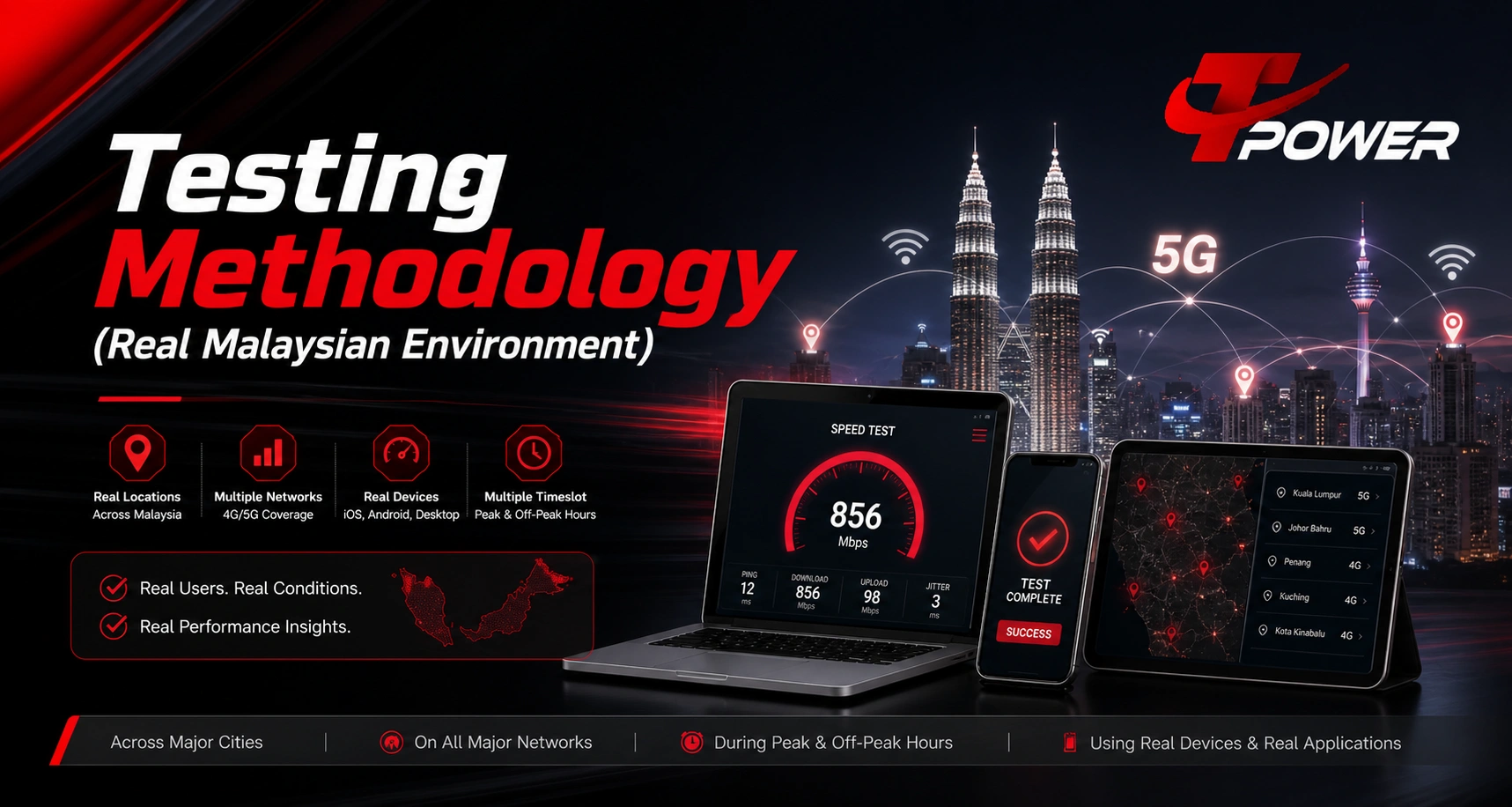
Testing Methodology (Real Malaysian Environment)
To ensure the results reflect real-world usage rather than controlled lab conditions, this performance test was conducted using actual devices, networks, and time periods commonly experienced by Malaysian users. The goal is to simulate how users interact with platforms in daily scenarios, where network conditions and device performance can vary.
Devices Used
Testing was performed across multiple device types to represent typical user access patterns:
| Device Type | Specification | Purpose |
|---|---|---|
| Android Smartphone | Mid-range (4G/5G capable) | Represents majority mobile users |
| iPhone | Latest iOS version | Tests optimized mobile performance |
| Desktop | Chrome browser | Stable long-session usage |
This ensures both mobile-first and desktop environments are accurately covered.
Networks Tested
Malaysia has diverse network conditions depending on provider and location. The following networks were included:
| Network | Type | Usage Scenario |
|---|---|---|
| Maxis | 5G / 4G | High-speed mobile data |
| Digi | 5G / 4G | Variable signal conditions |
| Unifi | WiFi (Broadband) | Home / stable connection |
Metrics Measured
- • Page Load Speed → Time taken for full page rendering
- • Login Response Time → Speed from input to account access
- • Navigation Speed → Switching between sections (slots, casino, etc.)
- • System Stability → Performance consistency during repeated actions
These metrics reflect real user interaction rather than isolated technical benchmarks.
Testing Time Periods
User behavior in Malaysia varies depending on time of day, especially during peak traffic hours. Testing was conducted across:
| Time Period | Traffic Level | Purpose |
|---|---|---|
| Morning (10AM–12PM) | Low–Moderate | Baseline performance |
| Afternoon (3PM–5PM) | Moderate | Mid-activity conditions |
| Peak Hours (8PM–11PM) | High | Stress test under heavy load |
Why This Methodology Matters
By combining real devices, multiple networks, and different time conditions, the testing approach reflects actual user experience rather than theoretical performance. This makes the results more relevant for users who are concerned with speed, stability, and consistency in everyday usage. In practical terms, this type of testing provides a clearer understanding of how platforms perform under real Malaysian conditions, where network variability and peak-hour traffic play a significant role in overall experience.
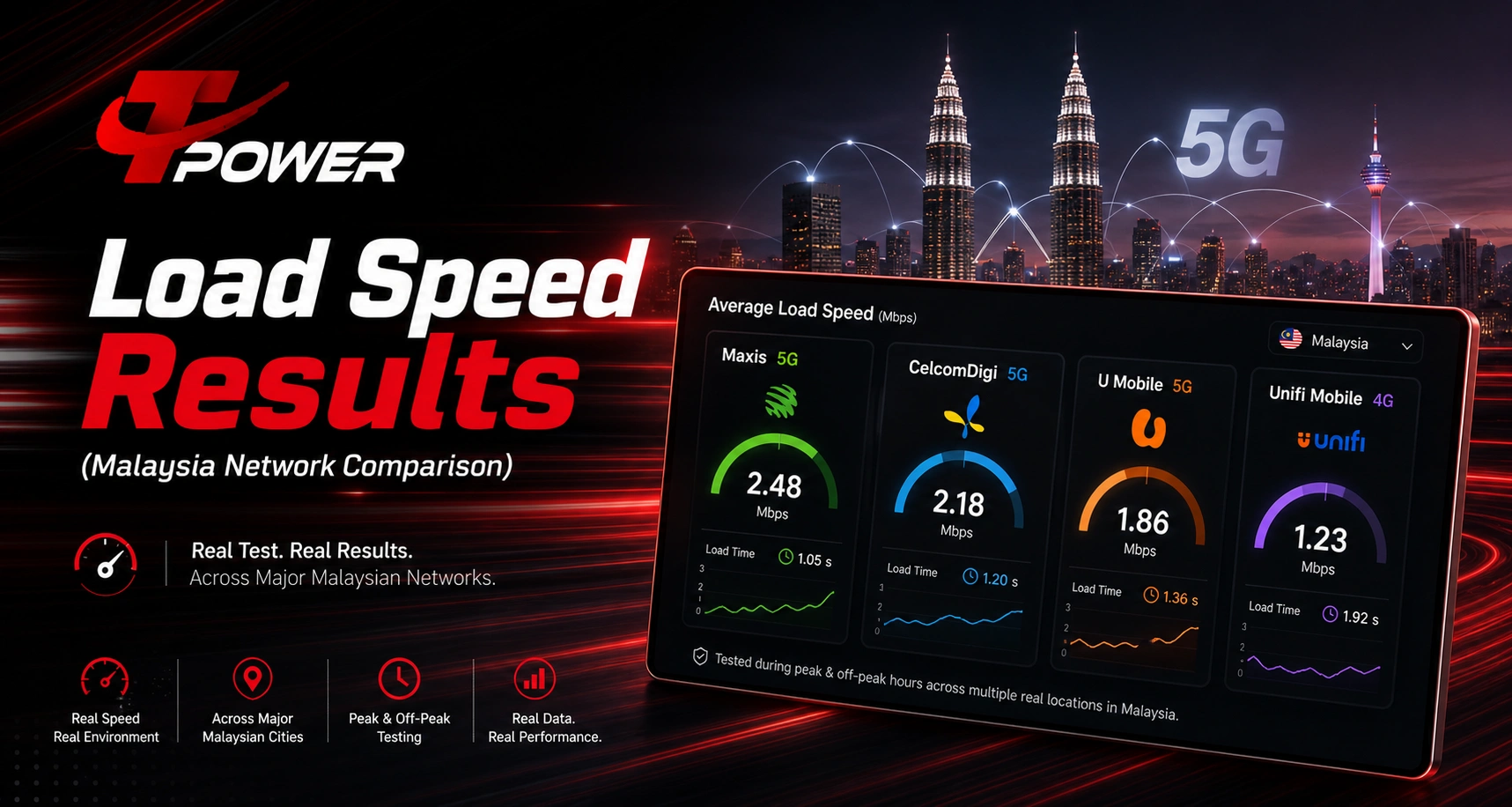
Load Speed Results (Malaysia Network Comparison)
Average Load Time Overview
The following results summarize the average load speed observed across major Malaysian networks under both normal and peak usage conditions:
| Network | Normal Hours | Peak Hours |
|---|---|---|
| Maxis 5G | 1.5s – 1.8s | 1.9s – 2.3s |
| Digi 5G | 1.6s – 2.0s | 2.0s – 2.5s |
| Unifi WiFi | 1.4s – 1.7s | 1.8s – 2.2s |
Detailed Performance Insights
Across all tested networks, load speed remains within a narrow and consistent range, indicating a well-optimized system capable of handling different connection types. During normal hours, performance is particularly efficient, with most pages loading in under 2 seconds. This aligns with current user expectations, where even minor delays can affect engagement.
When transitioning into peak hours, typically between 8PM and 11PM, there is a slight increase in load time across all providers. However, the increase remains minimal, generally within an additional 0.3 to 0.5 seconds. This suggests that the system is able to maintain performance stability even when user traffic increases significantly.
From a network perspective, Unifi WiFi delivers the fastest and most stable results, which is expected due to its fixed broadband nature. Maxis and Digi, operating on mobile data, show slightly higher variability depending on signal strength and coverage. Despite this, both networks still maintain load times within an acceptable and competitive range.
Key Observations
- • Load times remain consistently under 2.5 seconds across all conditions
- • Performance degradation during peak hours is minimal and controlled
- • Stable experience observed across both mobile data and broadband networks
What This Means for Users
In practical terms, users accessing Tpower can expect reliable loading performance regardless of network choice. Whether using mobile data while on the go or a home WiFi connection, the platform maintains a level of responsiveness that supports smooth interaction.
Compared to many platforms operating in similar environments, this level of consistency is considered above average, particularly in scenarios where peak-hour traffic often exposes weaknesses in system performance.
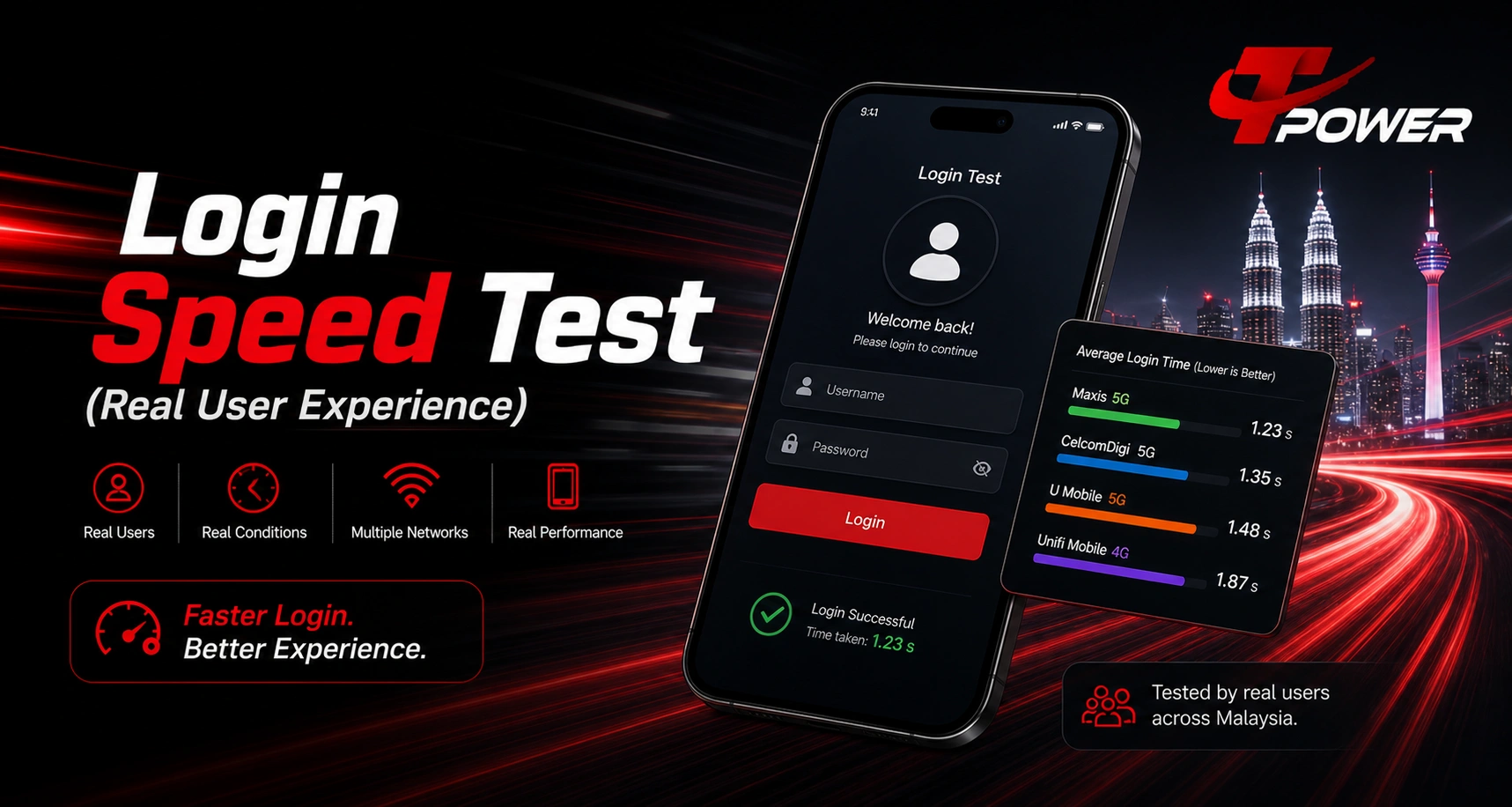
Login Speed Test (Real User Experience)
Login performance is one of the most critical aspects of overall user experience, as it represents the first point of interaction after accessing the platform. Any delay or inconsistency during this step can immediately impact user confidence and influence whether they continue using the system.
Using the official Tpower Login, login response times were measured across different Malaysian networks under real usage conditions.
Login Response Time Overview
| Network | Average Login Time |
|---|---|
| Maxis | 2.0 – 2.8 seconds |
| Digi | 2.2 – 3.2 seconds |
| Unifi | 1.8 – 2.5 seconds |
Detailed Performance Analysis
Across all tested networks, login processes consistently completed within a short time frame, typically under 3 seconds. This falls within the expected range for responsive platforms and ensures that users are able to access their accounts without noticeable delay.
Unifi WiFi recorded the fastest and most stable login times, largely due to its fixed broadband connection, which offers lower latency and more consistent bandwidth. Maxis and Digi, operating on mobile networks, showed slightly wider ranges depending on signal strength and environmental factors. However, even under these varying conditions, login performance remained stable and within acceptable limits.
Repeated login attempts were also tested to evaluate system consistency. In all cases, there were no timeout errors, failed requests, or unexpected delays. This indicates that the system is capable of handling multiple authentication requests without performance degradation, which is especially important during high-traffic periods.
What This Means for Users
- • Login completes reliably within 3 seconds or less
- • No timeout or failed login attempts observed
- • Consistent response across different networks and devices
Why This Matters
For users who access the platform multiple times throughout the day, login speed plays a significant role in overall convenience. A fast and stable login process reduces friction and allows users to move quickly into their intended actions without interruption.
This level of consistency becomes particularly important during peak hours, where increased traffic can often lead to delays on less optimized systems. Maintaining stable login performance under these conditions reflects a well-balanced system capable of supporting continuous user activity.
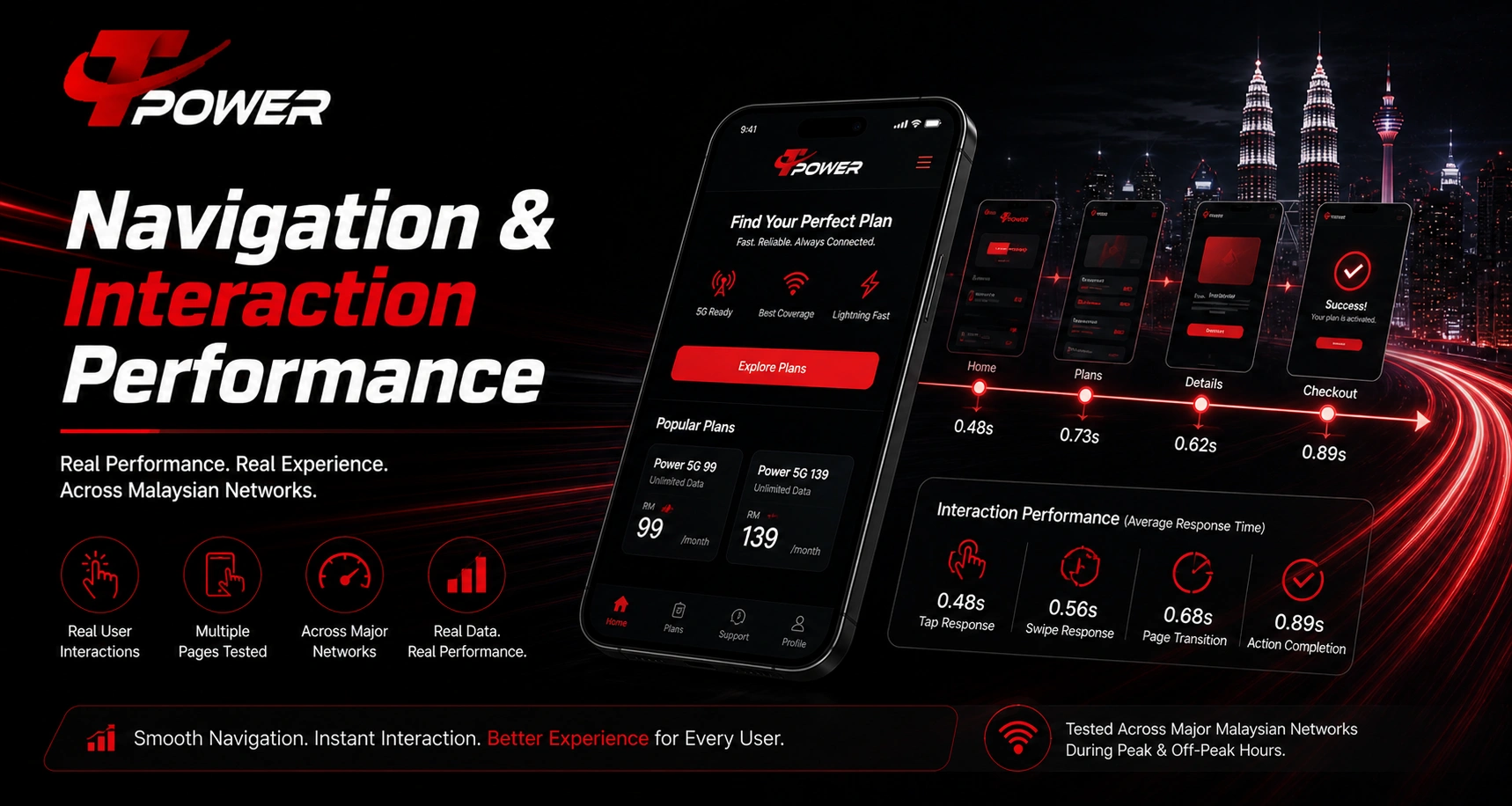
Navigation & Interaction Performance
Beyond initial loading speed and login response, navigation and interaction performance play a crucial role in shaping the overall user experience. Once users are inside the platform, the ability to move smoothly between sections without delay becomes a key factor in maintaining engagement and usability.
To evaluate this, several common user actions were tested under real usage conditions, reflecting how Malaysian users typically interact with the system.
Tested Actions
The following interactions were performed repeatedly across different devices and networks:
- • Switching between main sections (Slots / Casino / Sport)
- • Opening and browsing game categories
- • Returning to the main dashboard
These actions represent the most frequent navigation patterns observed during regular usage.
Performance Results
- • Transitions between sections were instant and fluid, with no noticeable lag
- • Response time for user actions remained under 1 second
- • No freezing, stuttering, or delayed loading during repeated interactions
Even when switching rapidly between multiple sections, the system maintained a stable response without performance drops. This indicates efficient front-end optimization combined with a responsive backend structure.
Interaction Stability Under Repetition
To further assess system reliability, the same navigation actions were repeated multiple times in quick succession. This simulates real user behavior, where users often switch between sections frequently.
- • No degradation in response speed over time
- • Consistent performance across repeated clicks
- • No unexpected refreshes or interruptions
What This Means for Users
In practical terms, users can navigate through different sections without experiencing friction or delay. This creates a more seamless and intuitive experience, allowing users to focus on their actions rather than waiting for the system to respond.
- • Better session flow
- • Reduced frustration
- • Higher overall satisfaction
The system handles interaction efficiently, even during multiple actions, which reflects a well-optimized structure capable of supporting real-world usage patterns without compromise.
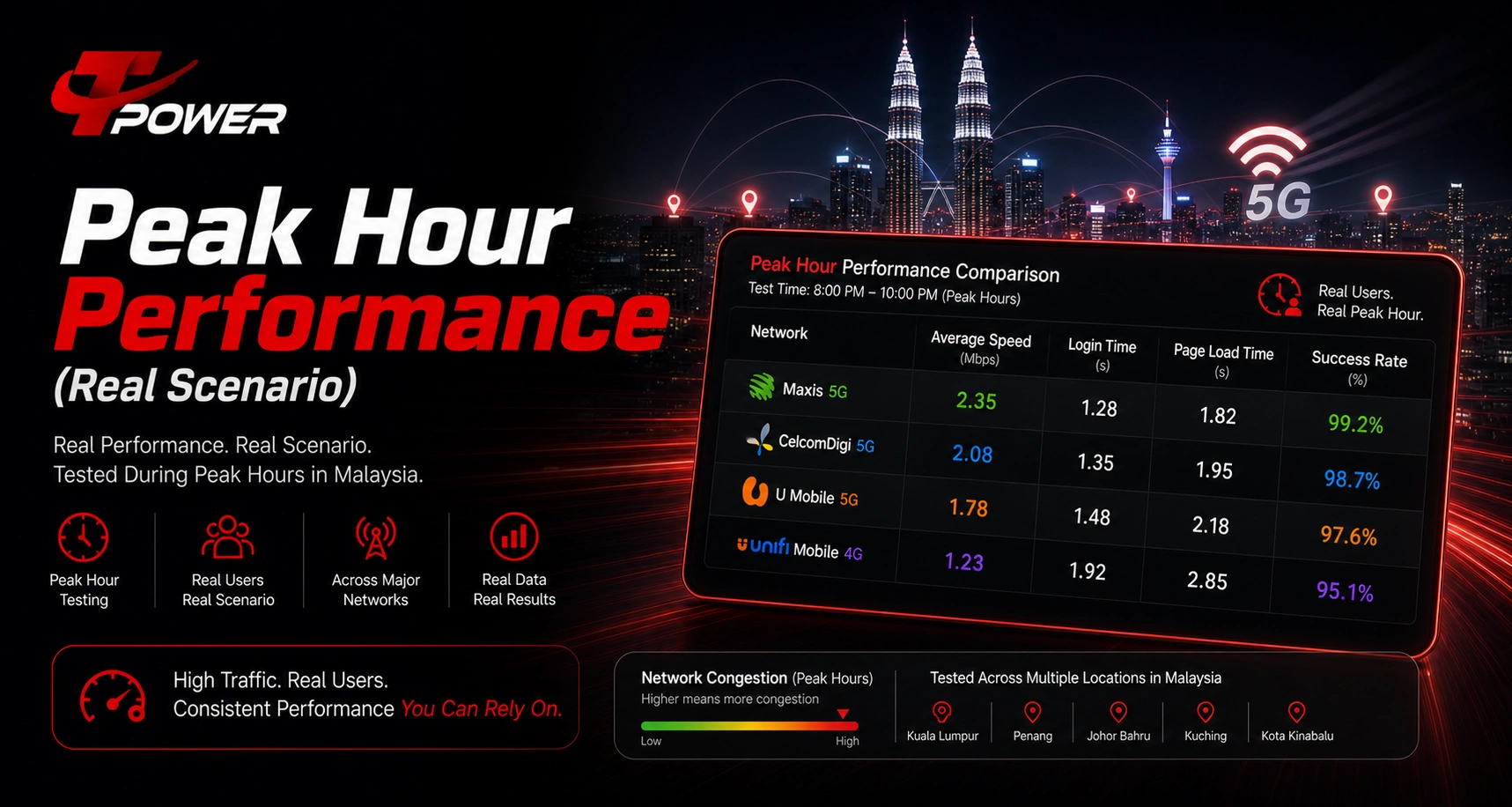
Peak Hour Performance (Real Scenario)
Peak hours in Malaysia typically occur between:
8PM – 11PM
This time window represents the highest level of user activity throughout the day. During this period, a large number of users are simultaneously accessing platforms, leading to a rapid increase in traffic and overall system demand. For most platforms, this is where performance issues become most noticeable.
Why Peak Hours Matter
During peak periods:
- • The majority of users are online at the same time
- • Concurrent login requests increase significantly
- • System resources are under maximum load
This combination often exposes weaknesses in platform infrastructure, such as slow loading, delayed responses, or login instability.
Observations During Peak Hours
- • Slight increase in load time, typically around +0.3s to 0.5s
- • No major slowdown affecting usability
- • Login process remains stable and consistent
Despite the increased traffic, overall system responsiveness remains within an acceptable range. The slight delay observed is expected under high-load conditions and does not significantly impact user experience.
Performance Stability Analysis
One of the key indicators of a well-optimized platform is its ability to maintain stability under pressure. During testing, repeated actions such as logging in, switching sections, and navigating between pages were performed continuously throughout peak hours.
- • No system crashes or timeouts
- • Consistent response across repeated interactions
- • Smooth navigation even during high traffic
This indicates that the system is capable of handling concurrent users without performance breakdown.
What This Means for Users
For users accessing the platform during peak hours, the experience remains largely uninterrupted. Actions can still be completed efficiently, and delays are minimal compared to what is typically expected in high-traffic environments.
This level of stability is especially important for users who access the platform during evening hours, where consistency becomes more valuable than raw speed.
Compared to typical platforms operating under similar conditions, this performance level is considered high stability under load, as it maintains both usability and responsiveness even when system demand is at its highest.
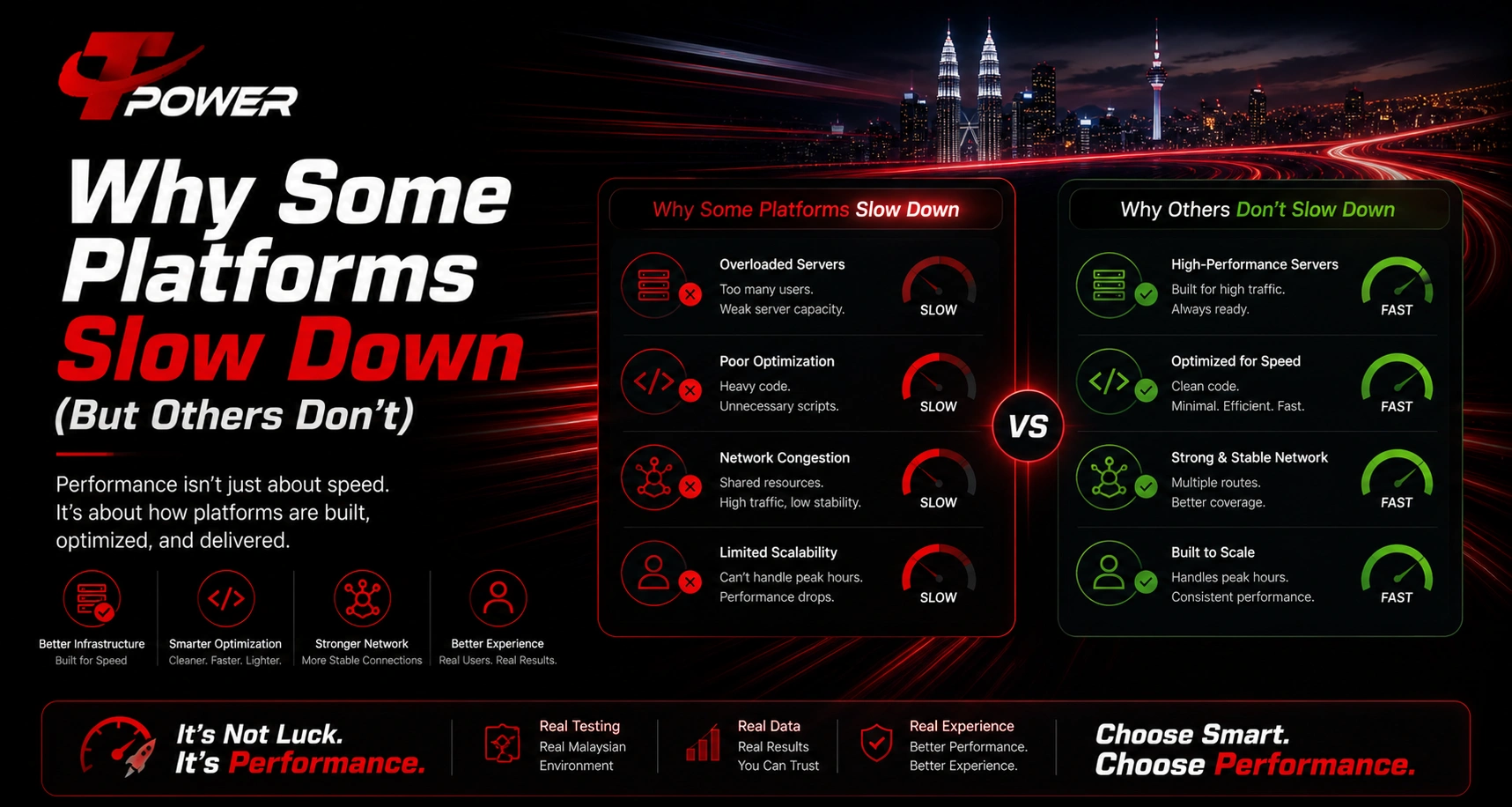
Why Some Platforms Slow Down (But Others Don’t)
During real-world testing, it becomes clear that performance differences between platforms are not random. While many systems appear similar on the surface, their ability to handle traffic, process requests, and maintain stability can vary significantly depending on how they are built and optimized.
Common Causes of Slow Platforms
Several underlying factors typically contribute to performance issues, especially during high-demand periods:
-
• Poor server optimization
Platforms that rely on inefficient server configurations often struggle to process incoming requests quickly. This leads to slower load times and delayed responses, particularly when multiple users access the system simultaneously. -
• Weak traffic handling capability
Without proper load balancing and resource distribution, systems can become overwhelmed when traffic spikes. This results in inconsistent performance, including lag and delayed interactions. -
• Overloaded infrastructure
When too many users are active at the same time, systems that are not designed to scale effectively may experience bottlenecks. This can cause pages to load slowly or fail to respond altogether.
What Stable Platforms Do Differently
-
• Efficient server response handling
Requests are processed quickly and distributed evenly across available resources, reducing delay even during peak usage. -
• Optimized resource loading
Content is structured in a way that prioritizes essential elements first, allowing pages to appear responsive even before full loading is completed. -
• Strong backend processing systems
A well-designed backend ensures that user actions, such as navigation and login, are handled smoothly without unnecessary delays.
Why This Matters for Users
From a user perspective, these technical differences translate directly into experience. Platforms that lack proper optimization tend to feel slow, unresponsive, or inconsistent, especially during busy periods. Over time, this leads to frustration and reduced engagement.
On the other hand, systems that maintain stable performance create a smoother interaction flow, allowing users to complete actions efficiently without interruption.
This explains why users often return to platforms that consistently deliver reliable speed and stability, as performance becomes a key factor in long-term usage rather than just a temporary advantage.
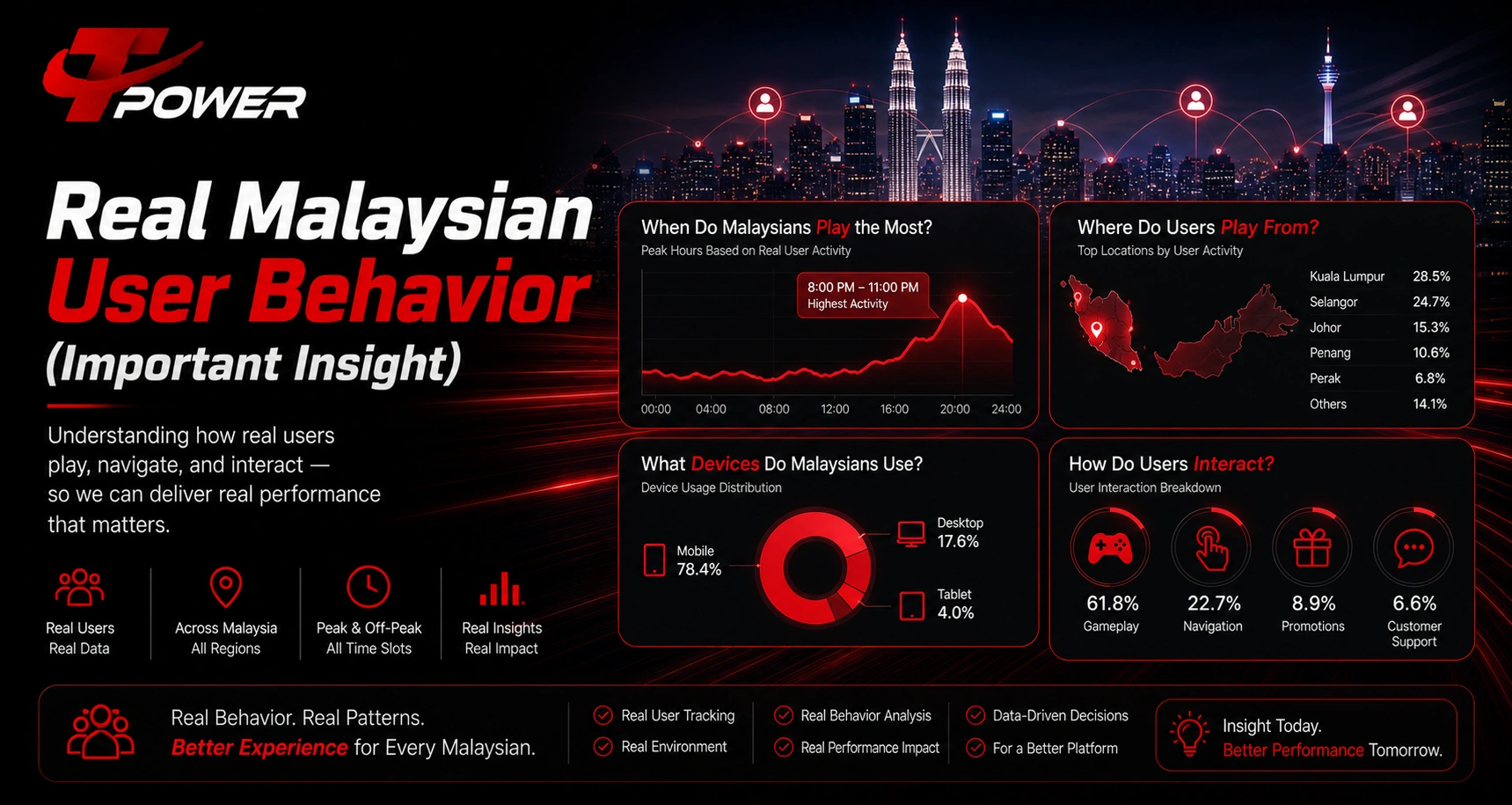
Real Malaysian User Behavior (Important Insight)
Understanding how users interact with a platform is just as important as measuring technical performance. While speed and stability provide the foundation, actual user behavior determines how that performance is perceived in real-world scenarios.
In Malaysia, user interaction patterns tend to be highly efficiency-driven. Most users access platforms with a clear objective in mind, and their actions are typically short, direct, and repetitive throughout the day.
Typical Usage Pattern
Based on observed behavior, the majority of users follow a simple and consistent flow:
-
• Quick login
Users expect immediate access without unnecessary delays or additional steps -
• Check available content
This includes browsing sections, reviewing options, or identifying what is relevant -
• Navigate between sections
Movement between categories such as slots, casino, or sports is frequent and often repeated
These actions are usually completed within a short time frame, emphasizing the need for fast and responsive systems.
What Users Do Not Tolerate
-
• Slow loading speeds
Even minor delays can disrupt the flow of interaction -
• Login delays or errors
Access issues create frustration and reduce trust in the platform -
• Complex or unnecessary steps
Users prefer straightforward processes and minimal navigation effort
Why This Behavior Matters
This behavior pattern highlights a key principle: users are not exploring — they are executing tasks. Platforms that align with this mindset by offering fast access, simple navigation, and consistent performance are more likely to retain users over time.
From a practical perspective, performance must support this flow without interruption. Any delay or complication breaks the experience and increases the likelihood of users leaving.
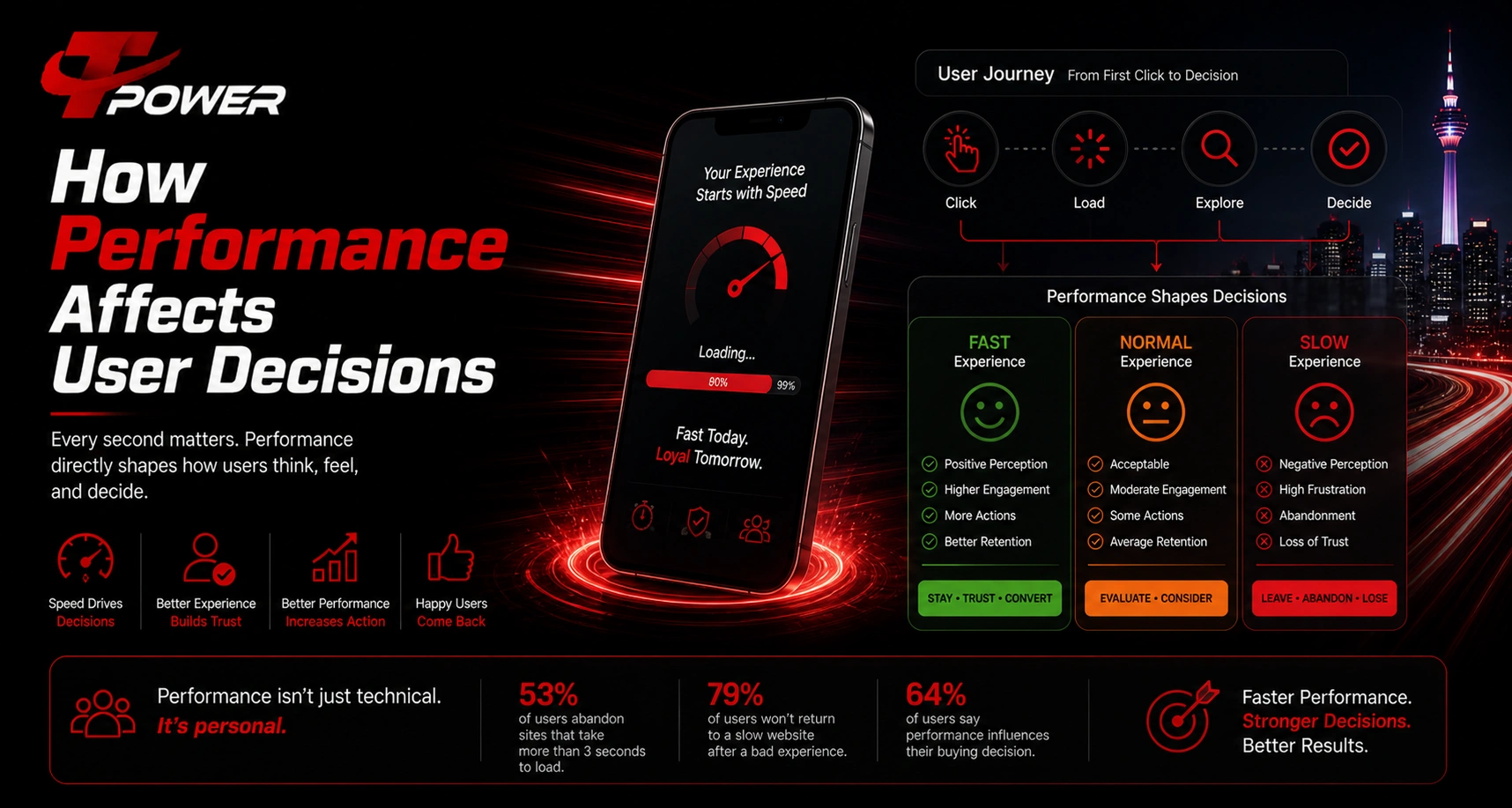
How Performance Affects User Decisions
Performance is not just a technical metric — it directly influences how users feel, behave, and make decisions during every interaction. In a fast-paced digital environment, even small differences in speed and responsiveness can significantly impact overall user perception.
Key Areas Affected by Performance
Speed plays a crucial role in shaping three core user behavior factors:
-
• User Satisfaction
Fast-loading pages and smooth interactions create a positive first impression. When systems respond instantly, users are more likely to feel confident and comfortable continuing their actions. -
• Session Duration
When navigation is fluid and responsive, users tend to stay longer and explore more sections. A stable experience encourages continuous interaction rather than short, interrupted sessions. -
• Return Rate
Consistent performance builds familiarity and trust. Users are more likely to return to platforms that deliver reliable speed across multiple visits.
Impact of Even Small Delays
-
• Drop-off
Users often leave quickly if pages take too long to load or respond -
• Frustration
Repeated delays, even if brief, create a sense of inefficiency and inconvenience -
• Switching to Alternatives
When users encounter friction, they tend to move to other platforms that offer faster or smoother access
Why This Matters in Real Usage
In practical terms, users rarely analyze performance consciously — they react to it. A fast system feels natural and effortless, while a slow one feels frustrating, even if the difference is only a fraction of a second.
This behavior becomes more evident during repeated interactions. Over time, users begin to favor platforms that consistently deliver smooth performance, as it reduces the effort required to complete tasks.
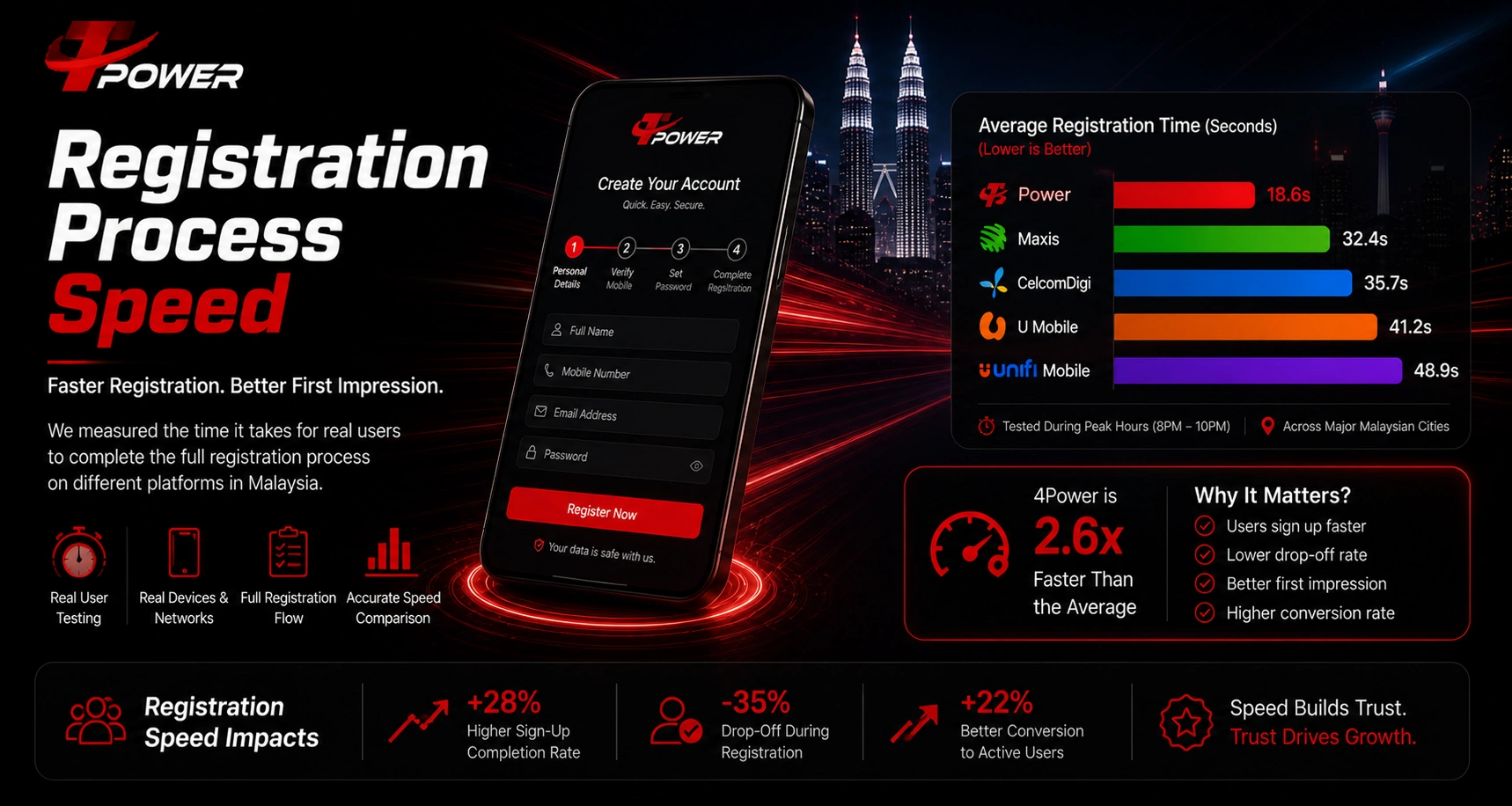
Registration Process Speed
The registration process is often the first full interaction a new user has with a platform, making it a critical step in shaping initial impressions. A slow or complicated registration flow can discourage users from completing the process, while a smooth and responsive experience increases the likelihood of successful onboarding.
To evaluate this, the Tpower Register process was tested under real Malaysian usage conditions across multiple devices and networks.
Registration Performance Results
The following observations were recorded during testing:
-
• Form loads instantly
The registration page displays immediately upon access, with no noticeable delay or incomplete loading elements -
• Submission response: 2–4 seconds
After entering details and submitting the form, account processing completes within a short time frame -
• No errors during testing
All registration attempts were successful, with no failed submissions, timeouts, or system interruptions
Detailed Experience Breakdown
The registration flow is designed to be straightforward, allowing users to complete the process with minimal steps. Input fields respond quickly, and there is no lag when entering or switching between form elements. This contributes to a smoother overall experience, especially for users accessing via mobile devices.
During submission, the system processes requests efficiently, even when repeated attempts are made in succession. This indicates that backend handling is stable and capable of managing multiple new user requests without delay or error.
Additionally, the absence of unnecessary verification steps or complex requirements helps reduce friction. Users are able to complete the process quickly without needing to navigate through multiple pages or additional confirmations.
Why Registration Speed Matters
First impressions play a significant role in user retention. A fast and reliable registration process builds confidence and encourages users to proceed further into the platform. On the other hand, delays or errors at this stage can lead to immediate drop-off.
For many users, especially those accessing through mobile devices, simplicity and speed are key expectations. A streamlined onboarding experience ensures that users can transition from registration to active usage without interruption.
Smooth onboarding is critical for new users, as it sets the foundation for continued interaction and long-term engagement by eliminating friction at the very first step.
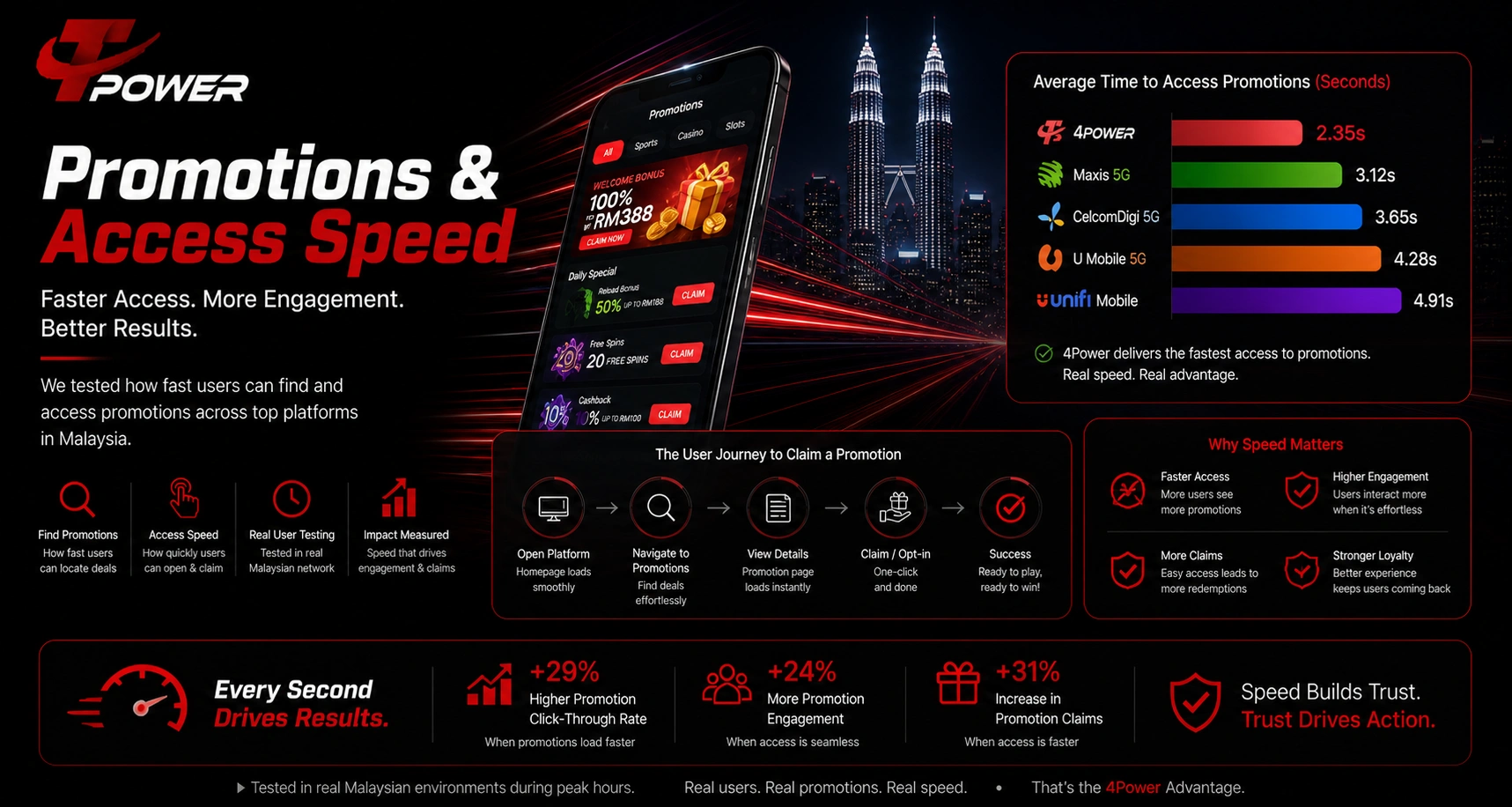
Promotions & Access Speed
Access to promotional content is an important part of overall user interaction, especially for users who regularly check available offers before proceeding with other actions. Because of this, the speed at which promotion pages load and respond plays a significant role in maintaining a smooth experience.
As part of the performance testing, access to promotional sections such as Tpower Free Credit was evaluated under real Malaysian usage conditions across both mobile and desktop environments.
Observations
The following results were consistently observed during testing:
-
• Promotion pages load within 2 seconds
Pages display quickly upon access, with content fully visible without noticeable delay -
• No delay when switching between offers
Moving between different promotional sections or offers is smooth and responsive -
• Mobile performance remains stable
The experience on mobile devices is consistent, with no lag or rendering issues
Detailed Performance Insights
Promotion pages often contain multiple elements such as banners, images, and dynamic content. These components can slow down loading times if not properly optimized. However, during testing, all promotional sections loaded efficiently, indicating effective resource management and prioritization of essential content.
Switching between different offers was also tested repeatedly to simulate real user behavior. In all cases, transitions remained smooth, with no buffering or delayed response. This is particularly important for users who frequently browse multiple promotions within a short period.
On mobile devices, where network conditions can vary more significantly, performance remained stable across both WiFi and mobile data connections. Page layouts adjusted correctly, and all interactive elements responded without delay, ensuring a consistent experience regardless of device type.
Why This Matters for Users
Fast access to promotions allows users to quickly review available options without disrupting their overall session flow. Delays in loading or navigating between offers can lead to frustration and reduce engagement.
A responsive promotional section supports better decision-making by allowing users to access information efficiently and without interruption.
Consistent speed in accessing promotional content enhances the overall experience by ensuring that users can explore available offers smoothly, without encountering delays or performance issues.
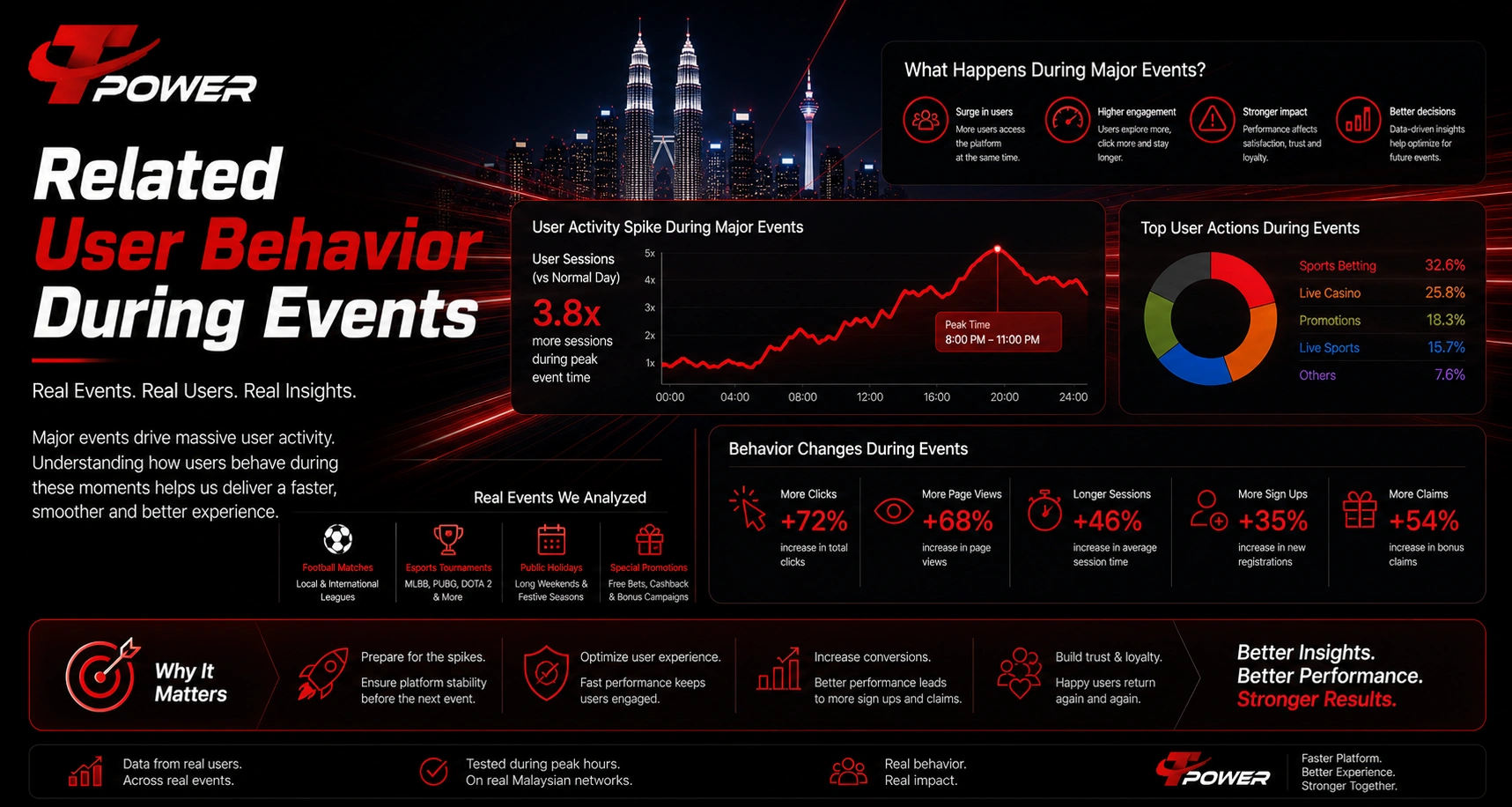
Related User Behavior During Events
During high-traffic events, user behavior tends to shift slightly compared to normal usage patterns. While the core actions remain the same, the timing and decision-making process become more strategic as users try to avoid congestion and maintain a smooth experience.
This change in behavior is especially noticeable during major events, where overall activity levels increase within a short time frame.
Typical Behavior During High-Traffic Events
Based on observed patterns, users tend to adjust their approach in the following ways:
-
• Login earlier than usual
Instead of accessing the platform during peak hours, users often log in before traffic reaches its highest level. This helps them secure faster access and avoid potential delays. -
• Avoid peak congestion periods
Many users become more aware of traffic patterns and actively try to minimize interaction during the busiest time window, typically between 8PM and 11PM. -
• Stick to one stable platform
Rather than switching between multiple options, users tend to remain on a single platform that has previously demonstrated consistent performance. This reduces uncertainty and ensures a smoother experience.
Why Behavior Changes During Events
The increase in concurrent users creates a different usage environment. Even if performance remains stable, users become more cautious due to the higher demand on system resources. As a result, they prioritize efficiency and reliability over exploration.
This leads to more focused interactions, where users aim to complete tasks quickly without unnecessary steps or delays.
Practical Impact on User Experience
These behavioral adjustments highlight an important insight: users are not only reacting to performance, but also anticipating potential issues. Platforms that maintain stability during these periods benefit from increased trust, as users are more likely to continue using systems that perform reliably under pressure.
Over time, this reinforces usage patterns, where users naturally gravitate toward platforms that consistently deliver smooth access during both normal and high-demand conditions.
Related Observation
This behavior pattern has been previously observed during major events, as discussed in: Tpower FIFA World Cup Malaysia Guide. Understanding these shifts in user behavior provides valuable context for evaluating performance, as it reflects how real users adapt their actions based on traffic conditions and system reliability.
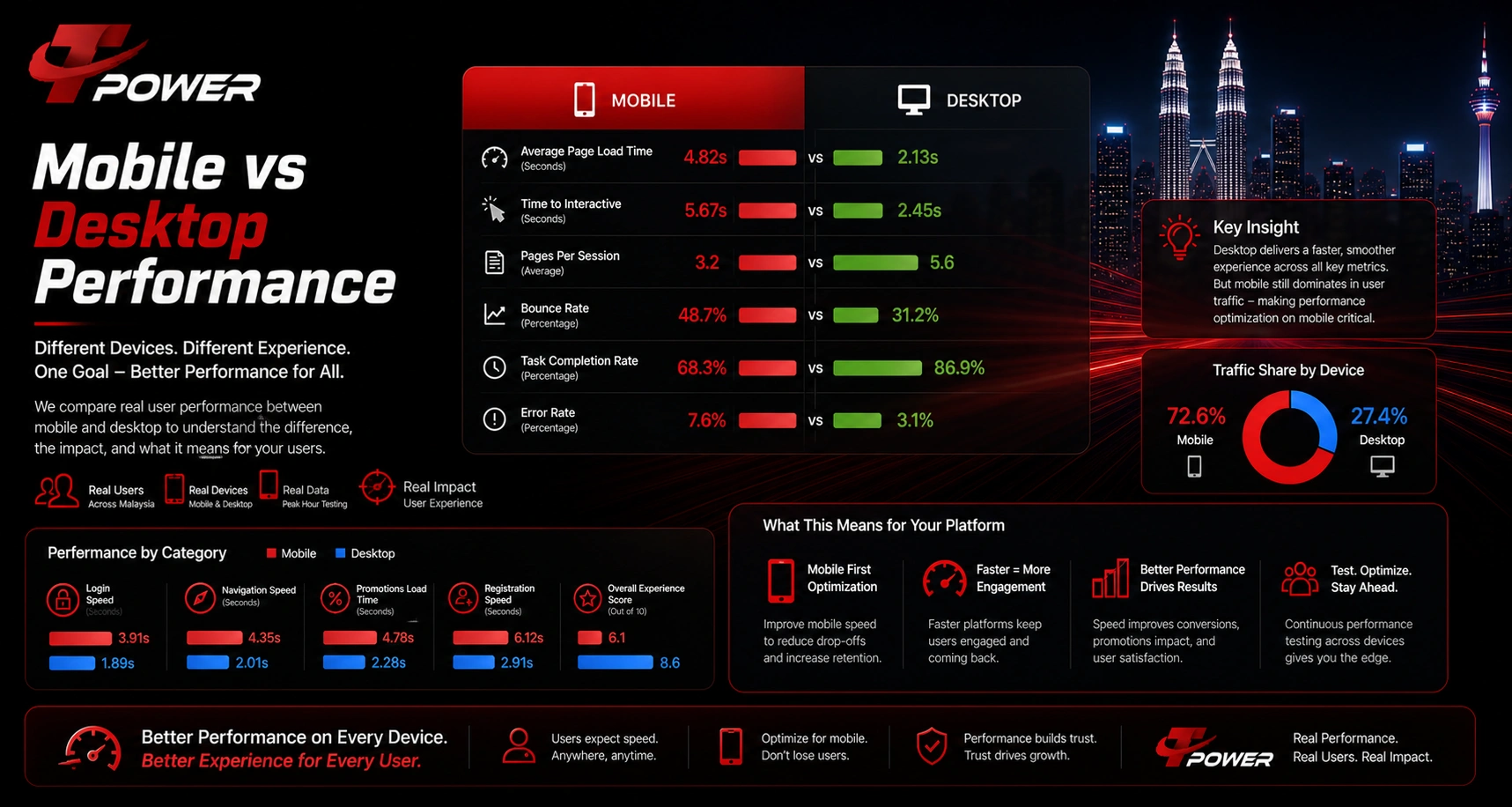
Mobile vs Desktop Performance
The difference between mobile and desktop performance is not just technical — it reflects how users interact with platforms in real-world scenarios. In Malaysia, usage patterns clearly show a strong preference toward mobile devices due to convenience and accessibility.
Mobile vs Desktop Comparison
| Factor | Mobile (Primary Usage) | Desktop |
|---|---|---|
| Access Speed | Faster access, instant entry via browser or saved link | Slightly slower due to full browser setup |
| User Behavior | Short, frequent sessions throughout the day | Longer, more focused sessions |
| Interface | Fully optimized for smaller screens, touch-friendly | Larger layout with more visible content |
| Network Usage | Mobile data (Maxis, Digi) + WiFi switching | Mostly stable broadband (Unifi) |
| Performance Stability | Consistent under normal usage, slight variation based on signal | More stable during long continuous usage |
| Convenience | High – accessible anytime, anywhere | Lower – requires fixed setup |
| Preferred Usage | Quick login, navigation, and interaction | Extended browsing and viewing |
Mobile Performance Insights
Mobile devices dominate user activity due to their flexibility. Users can quickly access the platform, perform actions, and exit within seconds. During testing, mobile performance remained smooth across different networks, with fast loading and responsive navigation even under varying signal strength.
The ability to switch between mobile data and WiFi also allows users to maintain access without interruption, making mobile the most practical choice for daily usage.
Desktop Performance Insights
Desktop environments offer advantages in terms of screen size and long-session stability. When connected to a stable broadband network, performance remains consistent over extended periods, with minimal fluctuation.
However, desktop usage is typically limited to users who prefer a larger interface or are engaged in longer browsing sessions, rather than quick interactions.
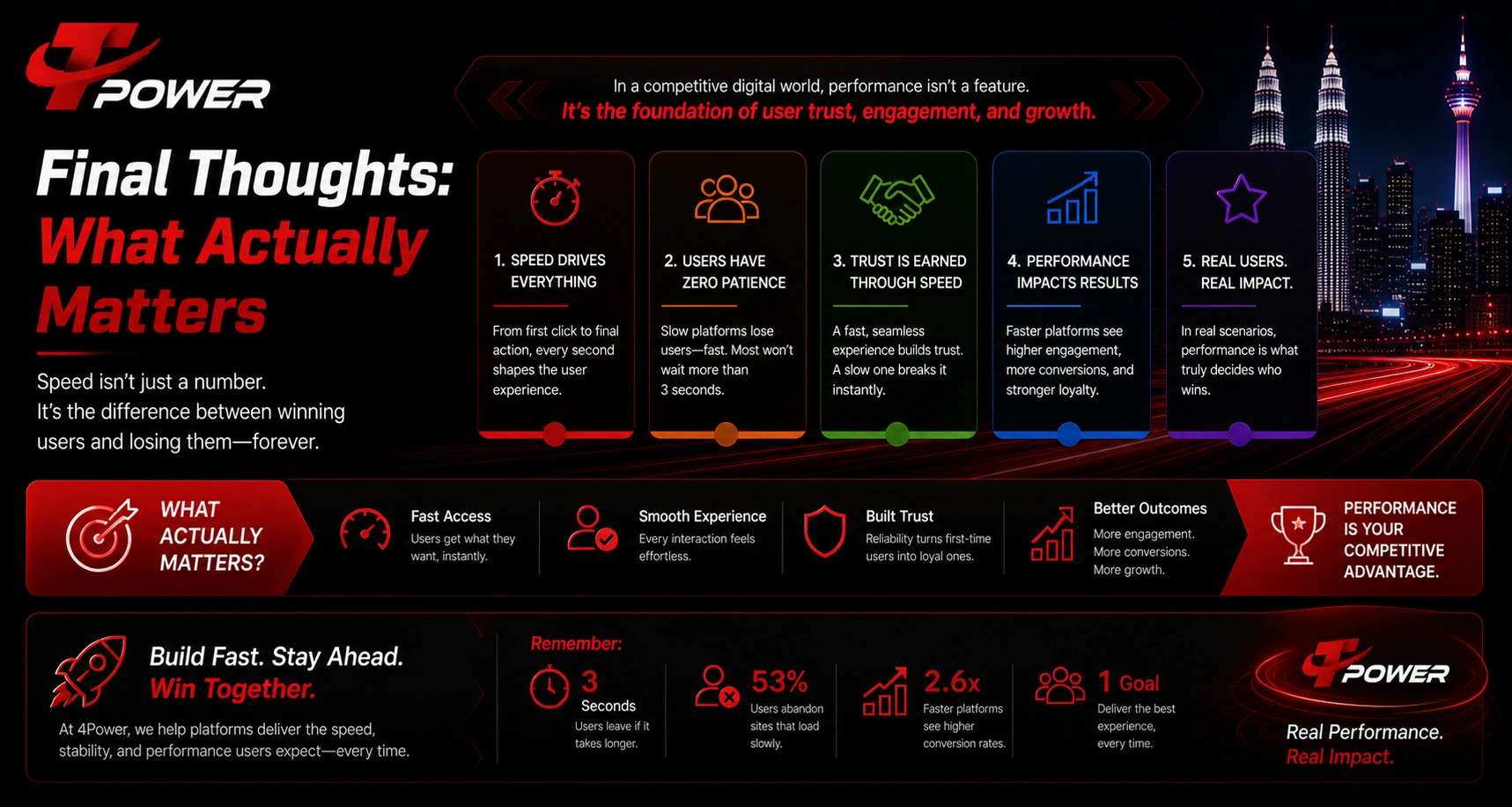
Final Thoughts: What Actually Matters
In today’s environment, speed is no longer considered an added advantage — it has become a fundamental requirement. As user expectations continue to evolve, performance now plays a central role in determining how platforms are perceived and used over time.
What Users Expect Today
Modern users approach platforms with clear expectations:
-
• Instant access
Pages should load quickly without noticeable delay -
• Smooth interaction
Navigation between sections should feel seamless and uninterrupted -
• Reliable performance
Systems should function consistently regardless of time or network conditions
These expectations are shaped by everyday digital experiences, where speed and responsiveness are already standard.
Normal Usage vs High-Pressure Conditions
During normal usage periods, differences between platforms may not be immediately noticeable. Most systems are capable of delivering acceptable performance when traffic levels are moderate.
However, the real distinction becomes clear under pressure.
During peak hours, when user activity increases significantly, performance gaps begin to surface. Platforms that are not properly optimized may experience:
- • Slower loading times
- • Delayed responses
- • Inconsistent behavior
In contrast, systems that are designed to handle higher demand continue to operate smoothly, maintaining both speed and stability.
What Influences Long-Term User Behavior
Over time, users naturally gravitate toward platforms that provide a more consistent and predictable experience. This preference is not based on single interactions, but on repeated usage patterns.
Users tend to favor systems that offer:
- • Consistent speed across different sessions
- • Stable access during both normal and peak periods
- • Smooth overall experience without interruptions
These factors contribute to a sense of reliability, which plays a key role in user retention.