
Key Takeaways: TPower Malaysia Deposit & Withdrawal Guide
This quick summary covers the main checks for deposits, withdrawals and payment troubleshooting. Available payment methods, transaction limits and processing conditions should be confirmed through the current account interface.
- Deposit Methods: Check which bank transfer, DuitNow QR or eWallet options are currently available for your account.
- Withdrawal Processing: Completion times may vary depending on the payment service, account status and transaction requirements.
- Account Details: Review the payment amount, receiving information and applicable verification requirements.
- Pending Transactions: Check the original transaction record before attempting another payment or withdrawal.
- Payment Security: Verify the website address, payment destination and transaction instructions before authorization.
Deposit vs Withdrawal: Quick Reference
| Check | Deposit | Withdrawal |
|---|---|---|
| Payment Method | Confirm the currently available deposit option. | Confirm the accepted receiving method or destination. |
| Transaction Amount | Review the amount and applicable deposit limits. | Review the available balance, limits and any fees. |
| Account Requirements | Check any payment or account restrictions. | Check verification and applicable withdrawal conditions. |
| Processing Time | Depends on the payment service and confirmation process. | Depends on the payment service and transaction status. |
| If Delayed | Verify the payment receipt and account transaction history. | Check the original request, status and account notices. |
Important: This guide does not guarantee particular payment methods, minimum deposit amounts, maximum withdrawal limits or processing times. Refer to the current transaction instructions and applicable terms.
TPower Malaysia Deposit & Withdrawal Guide – Fast Top Up & Payout
Introduction
This TPower Malaysia deposit and withdrawal guide explains how to review available payment methods, check transaction requirements, understand processing statuses, and avoid common payment mistakes. It covers both deposits and withdrawals, with practical information for users accessing the platform in Malaysia.
Before submitting a payment request, users should confirm the available payment options, applicable limits, and account details. Transaction processing times may vary depending on the payment method, account verification requirements, and the status of the payment service.
Users accessing TPower should review the current payment instructions shown in their accounts rather than assuming that every transaction follows the same procedure or completion time.
Quick Answer: TPower Deposit & Withdrawal Overview
Deposits: Check the payment methods currently available in your account, review the transaction amount and receiving details, and follow the displayed payment instructions.
Withdrawals: Review the available withdrawal options, confirm the receiving information, check any applicable account requirements, and monitor the submitted request through the transaction history.
Processing times: Deposit and withdrawal completion times are not necessarily identical. Delays may occur when additional verification or payment-service checks are required.
What This Deposit & Withdrawal Guide Covers
This guide explains how to review payment options, prepare transaction details, understand deposit and withdrawal statuses, and identify situations that may require further checking.
Whether you are reviewing the platform for the first time or have already completed your TPower Register, it is important to check the current account requirements before submitting payment information.
Existing users can access their accounts through TPower Login to review available account functions and transaction records. If a payment remains unresolved, users should check the original transaction status before submitting another request.
The following sections explain the general payment process and the checks users can perform when reviewing transactions associated with TPower.
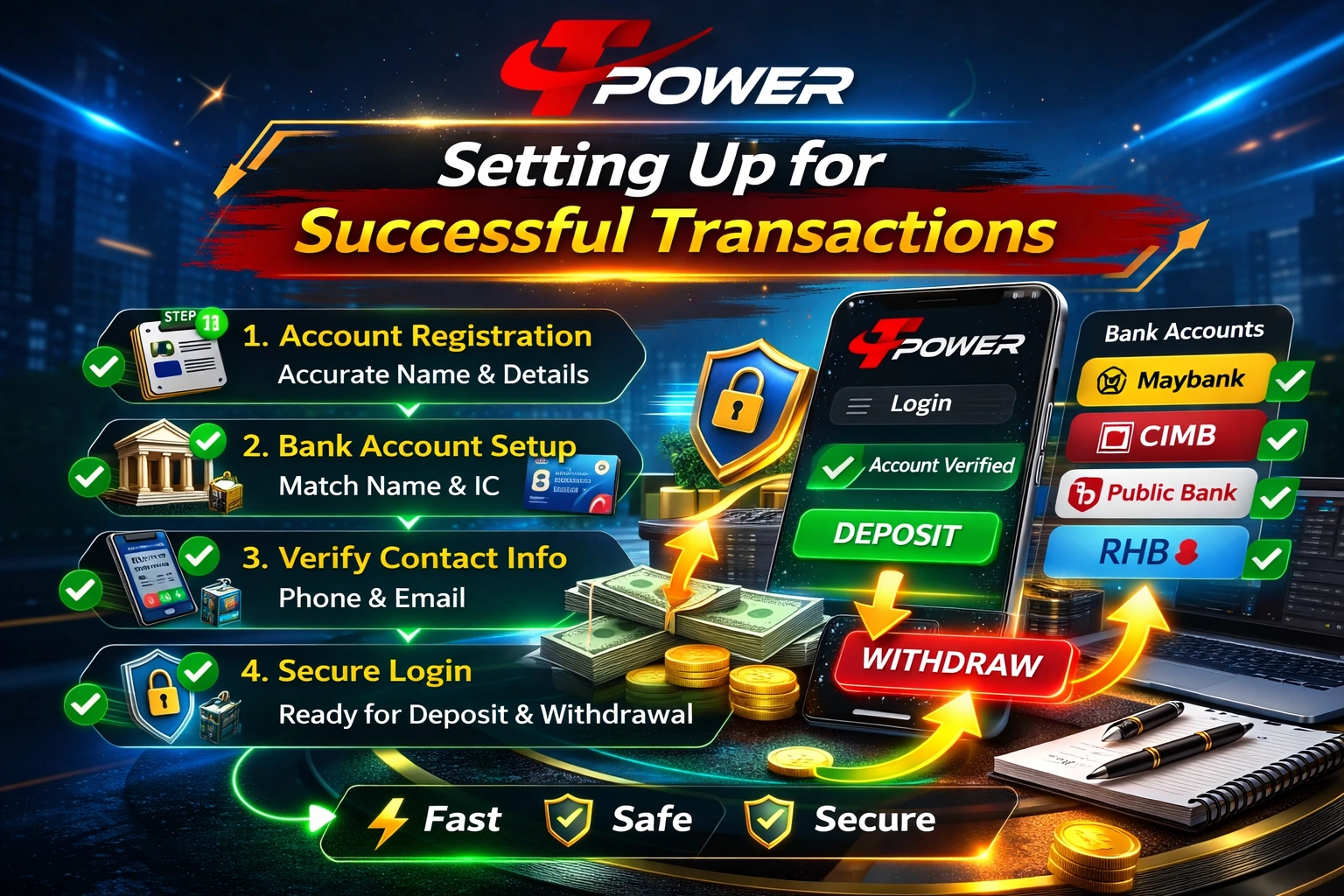
1. Setting Up for Successful Transactions
Before making a deposit or requesting a withdrawal, review your account information and confirm that the relevant details are accurate. Incorrect personal information, outdated contact details, or mismatched payment records may result in additional verification or transaction errors.
When using TPower, check the account requirements and payment instructions currently displayed. These requirements may vary depending on the payment method and the status of your account.
Quick Setup Checklist
The following checklist highlights important information to review before submitting a deposit or withdrawal request.
| Check Item | What to Review | Why It Matters |
|---|---|---|
| Registered Name | Check the spelling and review any applicable identity-verification requirements. | Helps identify possible discrepancies in account information. |
| Phone Number | Confirm that the registered phone number is accurate and accessible. | May be required for account notifications or verification. |
| Email Address | Check that the email address is correct and accessible. | Supports account communication and transaction-related enquiries. |
| Bank or Payment Details | Confirm the receiving details and review the displayed payment requirements. | Helps reduce the risk of entering incorrect payment information. |
| Account Status | Confirm that you are using the intended account and review any outstanding notices. | Helps identify incomplete verification or account-related requirements. |
Accurate Registration and Bank Account Details
Account information should be entered accurately during registration and kept up to date. If a payment method requires identity verification or account-name matching, differences between registered information and banking records may need clarification before a transaction can proceed.
Common details worth reviewing include:
- Spelling differences between registered names and payment account records.
- Missing or incorrectly entered name components.
- Outdated bank or receiving-account information.
- Payment details that do not meet the displayed ownership or verification requirements.
Example: If a registered account displays “Ahmad Ali” while the relevant banking record displays “Ahmad Bin Ali”, review the applicable name-verification requirements. Not every name variation necessarily results in rejection, but discrepancies may require additional checks.
Before confirming a transaction, review the payment methods currently displayed in your account. Do not assume that a particular Malaysian bank or transfer service is supported unless it appears among the available options.
Contact Details: Phone Number and Email
Accurate contact information can help you receive account notifications and respond to verification requests when these are required.
- Confirm that your registered phone number is active.
- Check that your email address is correctly entered.
- Review account notifications before submitting another transaction.
- Keep transaction reference details for support enquiries.
If your contact information is outdated, review the available account-update procedure or contact the appropriate support channel. Never share your password or one-time verification codes with another person.
Helpful Guides
For additional information about account access and platform features, refer to the following resources:
These guides provide additional account and platform information. For payment-related requirements, refer to the current transaction instructions available through TPower.
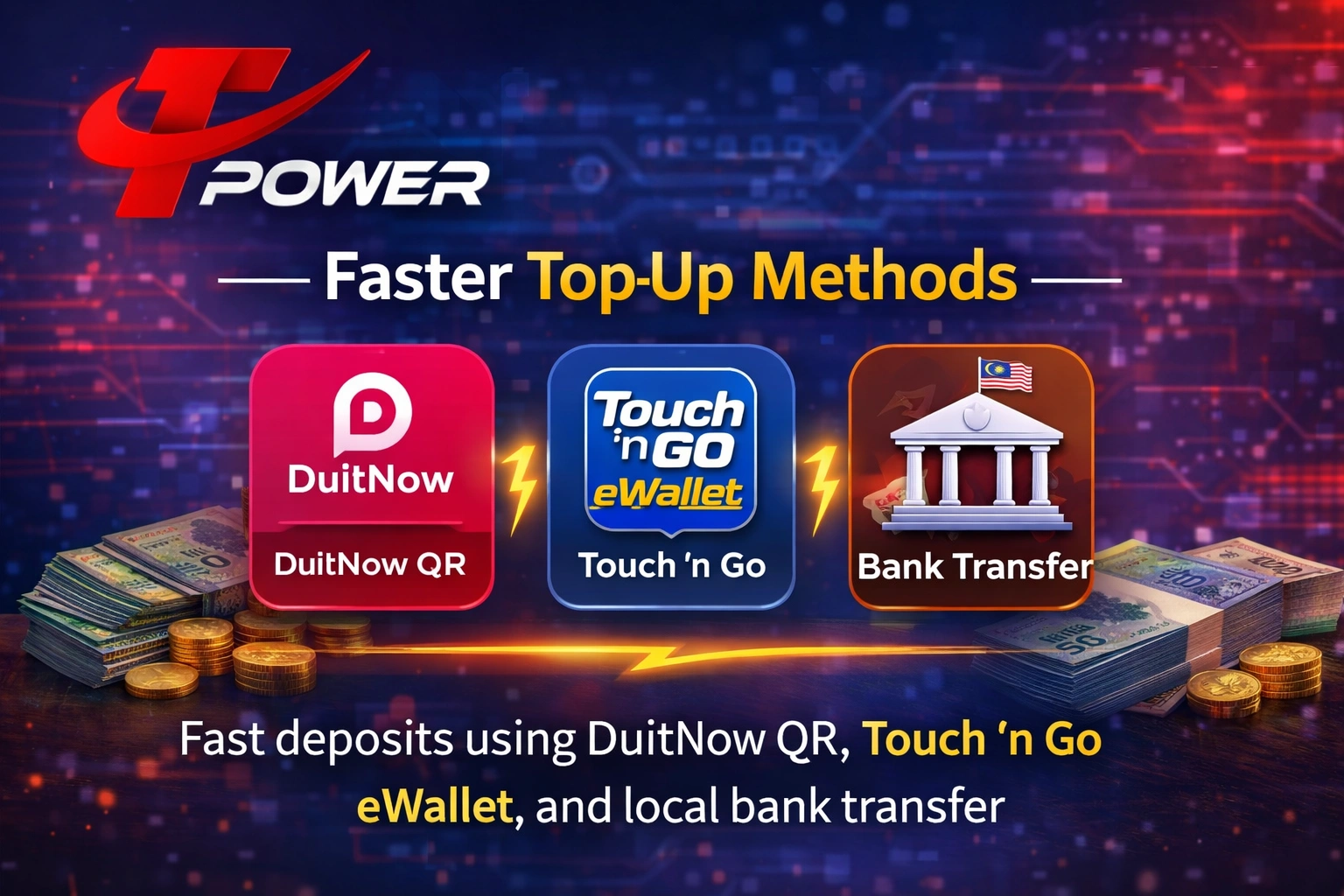
2. Deposit Methods and Payment Checks
Before making a deposit, review the payment methods currently available in your account. Malaysian payment services may include bank transfers, DuitNow QR and eWallet options, but their availability for a particular transaction must be confirmed through the payment interface.
Different payment methods can have different confirmation procedures, transaction limits and processing conditions. Selecting a method should therefore depend on its current availability, applicable requirements and the payment instructions displayed.
Deposit Methods Comparison
The following table explains how common Malaysian payment methods generally operate. It does not confirm that every method is supported for every account or transaction.
| Method | How It Works | What to Check | Confirmation |
|---|---|---|---|
| DuitNow QR | A participating banking or payment app is used to scan a payment QR code. | QR validity, recipient information, amount and payment availability. | Check both the payment-app record and account transaction status. |
| Touch ‘n Go eWallet | An eligible payment request may be completed through the eWallet interface. | Merchant availability, balance, limits and payment instructions. | Review the eWallet receipt and transaction history. |
| Bank Transfer | Funds are transferred using the bank’s supported payment process. | Recipient details, transfer reference, amount and bank requirements. | Confirm the bank transaction and corresponding account record. |
Important: The payment methods above are general examples, not a verified list of currently accepted deposit options. Only use a method when it is explicitly available through the relevant account payment interface.
DuitNow and QR Payments
DuitNow QR is a Malaysian payment service that allows users to initiate supported payments by scanning a QR code through a participating banking or payment application.
When a DuitNow QR option is available through TPower, users should verify the payment amount, recipient details and any displayed instructions before authorizing a transfer. A successful bank-side payment does not necessarily mean that the corresponding account balance has already updated.
Participating Banks and Payment Applications
Malaysian banking applications associated with DuitNow services include those from institutions such as Maybank, CIMB, Public Bank, RHB Bank, Hong Leong Bank and AmBank. The available DuitNow functions may differ by institution, application and payment type.
Participation in DuitNow does not establish that a bank supports deposits to a particular website. Check the current payment options and any applicable restrictions before proceeding.
How to Review a DuitNow QR Deposit
If DuitNow QR is available as an authorized payment option for your account, the general process may involve the following steps:
- Sign in to your TPower account through the intended website address.
- Open the available Deposit or Wallet section.
- Check whether DuitNow QR is currently offered as a payment option.
- Review the displayed amount, limits and transaction instructions.
- If a QR code is provided, check its validity and follow the displayed payment procedure.
- Review the recipient and payment amount in the participating banking application.
- Authorize the payment only after confirming that the details are correct.
- Retain the transaction reference or receipt and check the account transaction history.
The exact interface may differ from these general steps. If the payment option is unavailable or the displayed information is inconsistent, do not attempt to use an alternative recipient or an unverified payment link.
Touch ‘n Go eWallet: Availability and Payment Checks
Touch ‘n Go eWallet is a mobile payment service used in Malaysia. Its availability for a particular merchant or transaction depends on the payment arrangements and applicable service restrictions.
Before selecting an eWallet payment method, confirm that it is offered through the current payment interface. Check any applicable transaction limits, fees and verification requirements before authorizing a payment.
How to Review a Touch ‘n Go eWallet Payment
Where an eligible eWallet option is genuinely available, the payment process may include:
- Sign in to your TPower account and review the available payment options.
- Check whether Touch ‘n Go eWallet is listed as an accepted method.
- Review the amount, transaction limits and payment instructions.
- Follow the authorized payment process shown by the service.
- Confirm the payment information before authorizing the transaction.
- Retain any payment confirmation or transaction reference provided.
- Check the account transaction history to verify the recorded status.
Do not assume that a payment is complete solely because the eWallet application has displayed a confirmation. Check the corresponding transaction record and follow the service’s support process if there is a discrepancy.
Common Deposit Mistakes and How to Avoid Them
Deposit problems may occur when payment details are entered incorrectly, instructions are incomplete or the payment service does not confirm a transaction as expected.
| Potential Issue | Recommended Check |
|---|---|
| Incorrect payment amount | Compare the amount with the current transaction instructions before confirmation. |
| Expired QR code | Check whether the payment request is still valid before attempting payment. |
| Unsupported payment method | Use only the methods currently displayed as available. |
| Interrupted payment session | Review the payment application’s transaction history before retrying. |
| Payment completed but not reflected | Check the account record, retain the transaction reference and contact the relevant support channel if needed. |
| Duplicate payment attempt | Verify the original transaction status before initiating another request. |
What to Check Before Trying Again
- Review the original payment status before starting another transaction.
- Confirm that the payment method remains available.
- Check the amount, recipient information and transaction reference.
- Review any error messages or notices from the payment service.
- Contact the relevant support channel if the transaction status remains unresolved.
Deposit reminder: A completed bank or eWallet transaction and an updated website account balance are separate confirmation events. If they do not match, keep the original payment reference and investigate before making another payment.
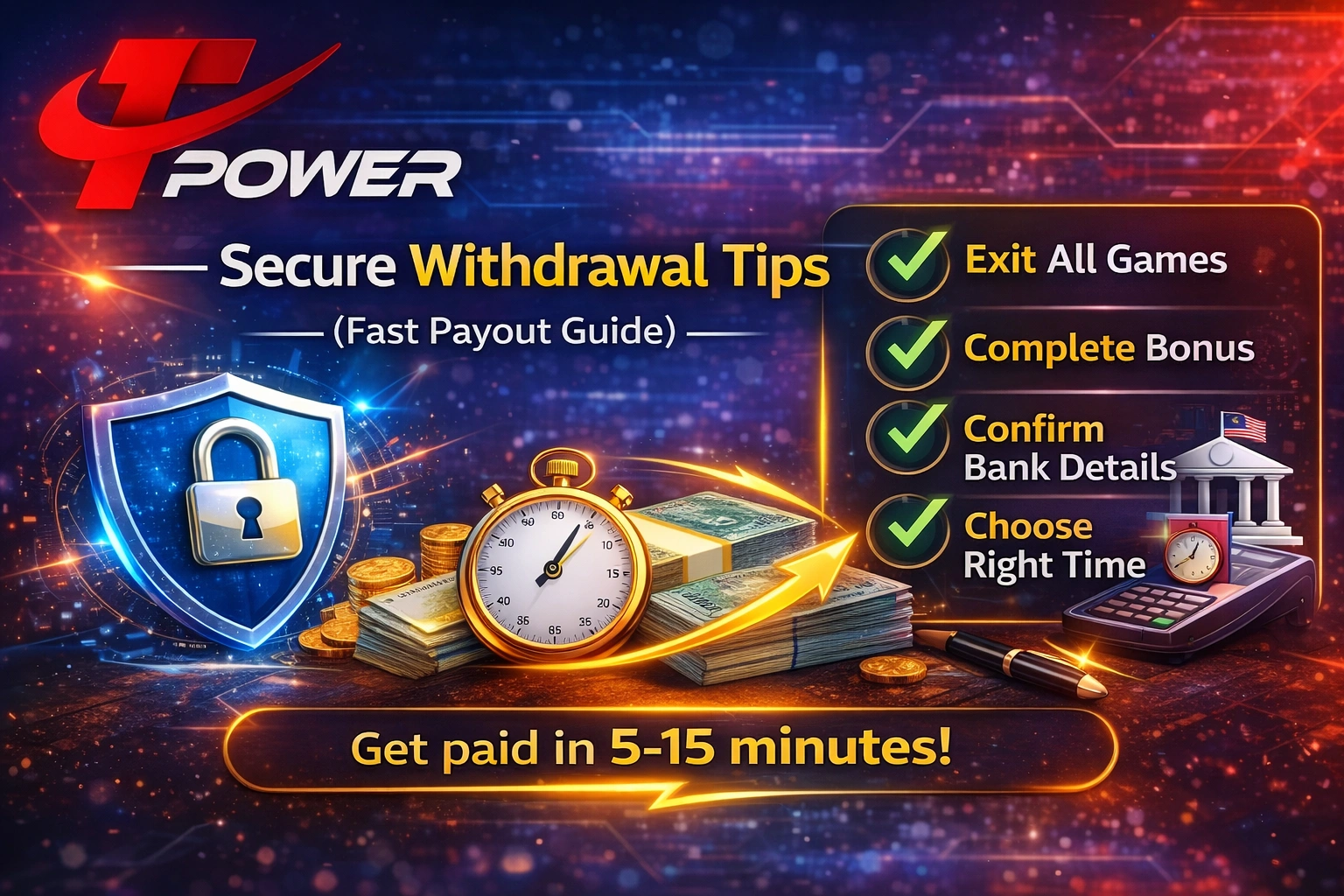
3. Withdrawal Requirements, Processing Times & Transaction Checks
Before requesting a withdrawal, review your account status, receiving details and any applicable transaction requirements. Withdrawal processing times may vary depending on the payment method, verification checks and the status of the receiving financial institution.
A withdrawal request may move through several stages before reaching a final status. Understanding these stages and checking the original transaction record can help users identify problems without submitting unnecessary duplicate requests.
Withdrawal Processing Time Overview
The table below explains common factors that may affect withdrawal processing. It does not represent guaranteed completion times or confirm which payment methods are currently supported.
| Payment or Processing Factor | What May Affect Completion | What to Check |
|---|---|---|
| Local Bank Transfer | Payment-service processing, receiving-bank requirements and transaction verification. | Available withdrawal methods, receiving details and current transaction status. |
| eWallet (if available) | Service availability, transaction limits and applicable verification requirements. | Whether the eWallet is an accepted withdrawal destination and whether any restrictions apply. |
| Bank or Payment-Service Maintenance | Temporary service interruptions or scheduled maintenance. | Current notices from the relevant bank or payment provider. |
| Account Verification | Outstanding identity checks or additional account requirements. | Account notifications and any requested verification steps. |
Important: Do not assume that every withdrawal will be completed within a fixed number of minutes. Refer to the processing guidance shown for the specific transaction, where available.
Quick Pre-Withdrawal Checklist
Before submitting a withdrawal request, review the following information:
- Account status: Check whether verification or account-related requirements remain outstanding.
- Receiving details: Confirm that the bank or payment destination information is correct.
- Withdrawal amount: Review the amount, any displayed limits and applicable fees.
- Promotion conditions: Check whether any applicable bonus or promotional requirements affect the available balance.
- Existing requests: Review pending withdrawals before creating another request.
- Service notices: Check for relevant payment-service or account notifications.
Review Bonus and Promotional Requirements
Some promotions may have conditions that affect when certain balances become eligible for withdrawal. These conditions can differ between campaigns and should be checked against the applicable terms.
Before submitting a withdrawal, review:
- Whether the relevant promotion has outstanding conditions.
- Whether any turnover or other eligibility requirements apply.
- Whether the available withdrawal balance differs from the total displayed account balance.
- Whether the account contains notices requiring further action.
Do not assume that every promotion uses identical requirements. Refer to the current campaign terms and the information displayed in your account.
Bank Maintenance and Withdrawal Timing
Banks and payment services may occasionally experience scheduled maintenance, temporary interruptions or transaction-processing delays.
Maintenance schedules differ between institutions. There is no single maintenance window that should be assumed to apply to every Malaysian bank.
- Check the receiving bank’s official service notices if a delay is suspected.
- Review the original withdrawal request before attempting another transaction.
- Retain any transaction reference or confirmation provided.
- Contact the relevant support channel if the transaction exceeds its stated processing guidance or displays an unresolved error.
Understanding Withdrawal Statuses
Transaction labels may vary between systems. The following descriptions explain common withdrawal-status terms.
| Status | General Meaning | Recommended Check |
|---|---|---|
| Pending | The request has not yet reached a final outcome. | Review the original transaction and any account notices. |
| Processing | The transaction may be undergoing payment or verification steps. | Check the latest recorded status and applicable processing guidance. |
| Rejected or Failed | The request has not completed successfully. | Review any displayed reason before taking further action. |
| Completed | The system records the request as completed. | Confirm the intended receiving destination and payment record. |
Common Withdrawal Problems and Initial Checks
If a withdrawal displays an unexpected status, begin by reviewing the original transaction. Different problems may require different actions.
Withdrawal Pending
A pending status does not automatically mean that the withdrawal has failed. The request may still be awaiting processing or review.
- Check the transaction date, amount and current status.
- Review any outstanding account verification requests.
- Confirm the submitted receiving details.
- Avoid submitting a duplicate request solely because the original remains pending.
Withdrawal Rejected or Failed
A rejected or failed request has not completed successfully. The reason may be shown in the transaction record or an account notification.
- Review the displayed rejection or error message.
- Check whether the receiving information was entered correctly.
- Review any applicable account or payment-method restrictions.
- Contact the appropriate support channel if the reason is unclear or cannot be corrected.
Final Checks Before Submitting a Withdrawal
Before confirming a withdrawal through TPower, review the amount, receiving details, applicable account requirements and current transaction instructions.
- Confirm that the receiving details are accurate.
- Review the available withdrawal balance, limits and any applicable fees.
- Check outstanding account or promotional requirements.
- Submit the request only after reviewing the displayed information.
- Retain the transaction reference and monitor the original request.
Security reminder: Never share account passwords or one-time verification codes when requesting payment assistance. Use the appropriate support channel and provide transaction references only where necessary.
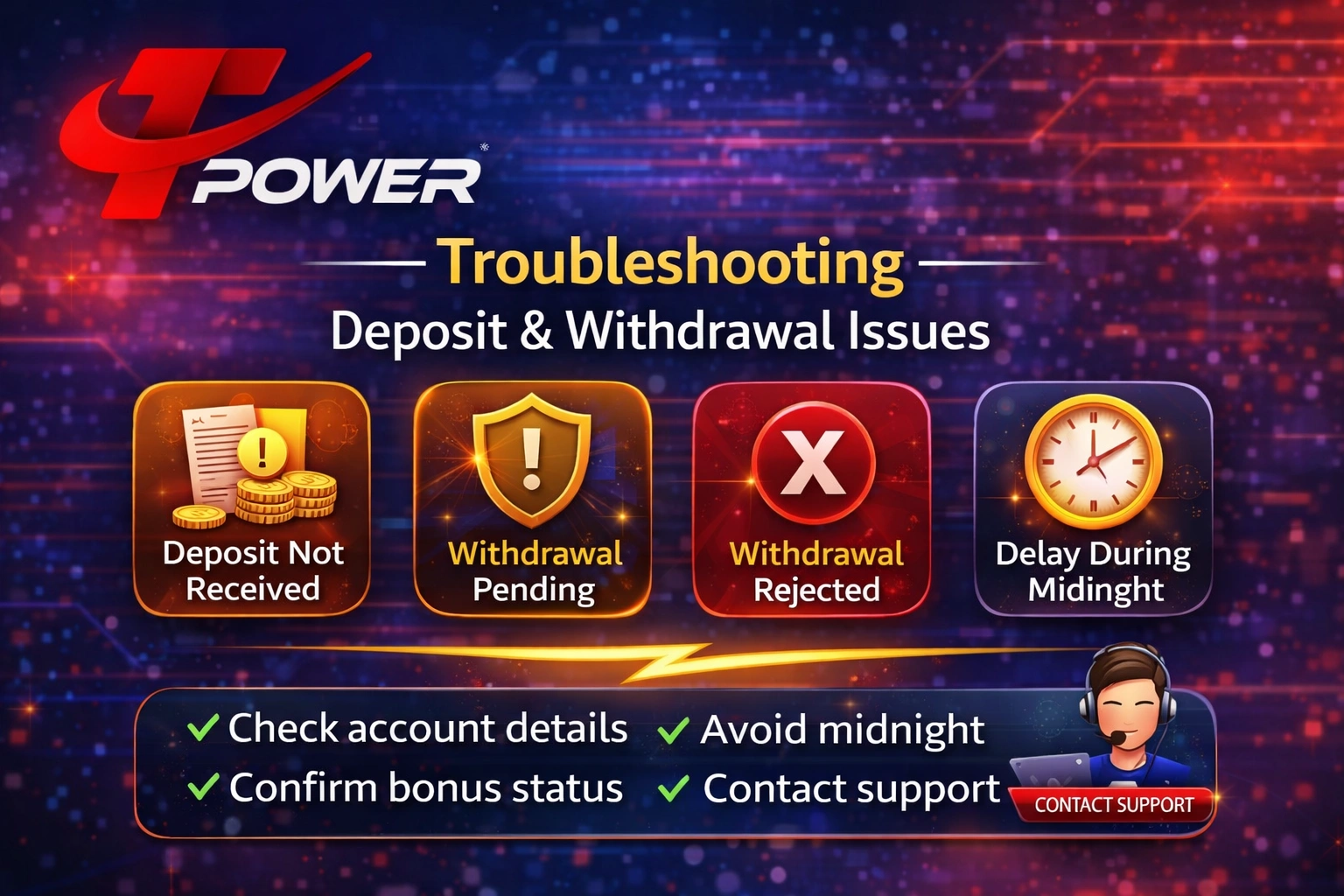
4. Troubleshooting Deposit & Withdrawal Issues
Deposit and withdrawal problems can occur for different reasons, including incomplete payment confirmation, incorrect transaction details, account verification requirements or temporary payment-service interruptions.
Before submitting another payment or withdrawal request, check the original transaction status. This helps distinguish a processing delay from a failed transaction and reduces the risk of duplicate requests.
Common Deposit and Withdrawal Issues
Use this overview to identify the first checks to perform when a transaction does not complete as expected.
| Problem | Possible Explanation | Recommended Action |
|---|---|---|
| Deposit Not Received | Payment confirmation is incomplete, or the account record has not updated. | Verify the payment receipt and transaction history before retrying. |
| Withdrawal Pending | The request has not reached a final processing status. | Check account notices, receiving details and the original request. |
| Withdrawal Rejected | Payment details, account requirements or other conditions may need attention. | Review the rejection reason before correcting or resubmitting information. |
| Payment-Service Delay | A bank or payment provider may be experiencing maintenance or interruption. | Check official service notices and the recorded transaction status. |
| Completed but Not Received | The displayed status and receiving account record do not match. | Confirm the destination and retain the transaction reference. |
Deposit Not Received After Payment
If your bank or eWallet shows that a payment was completed but the corresponding account balance has not changed, do not immediately assume that the deposit has failed.
A successful payment confirmation and an updated account balance are separate records. A discrepancy should be checked before another payment is initiated.
What to Check
- Open the original transaction in your banking or payment application.
- Confirm whether the payment status is completed, pending or failed.
- Review the payment amount, date, recipient and transaction reference.
- Check the corresponding account transaction history.
- Retain the payment confirmation or receipt for reference.
- If the records remain inconsistent, contact the relevant support channel with the transaction details.
Important: Avoid making a second payment solely because the first deposit has not appeared in your account balance. Verify the original payment status first.
Withdrawal Pending
A pending withdrawal generally means that the request has not reached a final state. It does not necessarily indicate that the transaction has failed or been rejected.
Possible factors include outstanding account checks, payment-service processing or transaction requirements that have not yet been completed.
What to Do
- Review the original withdrawal request and its current status.
- Confirm the submitted amount and receiving details.
- Check for outstanding verification or account notifications.
- Review any applicable withdrawal or promotional requirements.
- Contact the appropriate support channel if the request exceeds the stated processing guidance or remains unresolved.
Do not submit repeated withdrawal requests without first confirming the status of the original transaction.
Withdrawal Rejected or Failed
A rejected or failed withdrawal has not completed successfully. The reason may be related to payment details, account requirements or other transaction conditions.
Recommended Checks
- Review any rejection message displayed in the transaction history.
- Check the receiving bank or payment-account information.
- Confirm whether the payment method remains available for withdrawals.
- Review any outstanding verification or account-related requirements.
- Ask the relevant support channel for clarification if the reason is not displayed.
Correct the identified issue only through the available account procedures. If resubmission is permitted, confirm that the previous request has reached a final status first.
Bank or Payment-Service Delays
Some payment delays may be related to maintenance, service interruptions or processing conditions at the relevant financial institution.
Malaysian banks do not all follow one universal maintenance schedule. Users should check the official notices of the relevant bank or payment provider instead of assuming that delays always occur during specific hours.
- Check the bank or payment provider’s current service status.
- Review the original transaction before initiating another request.
- Keep the transaction reference and payment confirmation.
- Follow the relevant support procedure if the delay remains unresolved.
Information to Prepare Before Contacting Support
If the transaction cannot be resolved through the available account records, prepare the following information before contacting the appropriate support channel.
| Information | Why It Helps |
|---|---|
| Transaction Reference | Identifies the specific payment or withdrawal request. |
| Transaction Date and Time | Helps locate the relevant payment record. |
| Transaction Amount | Helps distinguish between multiple requests. |
| Current Status | Shows whether the request is pending, failed or completed. |
| Payment Confirmation | Provides supporting evidence where appropriate. |
| Error Message | Helps identify the specific issue requiring attention. |
Security reminder: Do not share passwords, one-time verification codes or unnecessary banking credentials when requesting transaction assistance. Redact sensitive information from screenshots wherever possible.
Final Troubleshooting Checklist
- The original transaction status has been checked.
- The amount and receiving details have been reviewed.
- Relevant account notifications have been checked.
- Any displayed error or rejection reason has been reviewed.
- The transaction reference has been retained.
- A duplicate request has not been submitted unnecessarily.
These checks can help clarify the next appropriate action, although they do not guarantee that a transaction will be completed within a particular timeframe.

5. Payment Security and Website Verification
Before entering account information or reviewing payment instructions, confirm that you are using the intended website. Phishing pages can imitate familiar designs and may attempt to collect passwords, banking details or other sensitive information.
When accessing TPower, review the website address carefully and verify payment information before authorizing any transaction. A familiar logo or page design alone does not establish that a website is trustworthy.
Quick Payment Security Checklist
Use the following checks before entering account details or confirming a payment.
| Check Item | What to Review | Why It Matters |
|---|---|---|
| Website Address | Check the full domain in the browser address bar. This guide is published on tpowermy88.com. | Helps identify unexpected destinations or lookalike URLs. |
| HTTPS Connection | Check for HTTPS and any browser security or certificate warnings. | Helps identify connection-security problems, although HTTPS alone does not prove legitimacy. |
| Link Source | Be cautious with unsolicited messages, advertisements and shortened links. | Reduces the risk of following misleading or phishing links. |
| Payment Destination | Review the recipient, amount and payment instructions before authorization. | Helps prevent payments being sent to an unintended destination. |
| Account Credentials | Do not disclose passwords or one-time verification codes. | Helps protect against unauthorized account access. |
Check the Website Domain Before Signing In
The domain used for this guide is tpowermy88.com. Before signing in, compare the full website address with the address you intended to visit.
Be cautious of unexpected changes to the website address, including:
- Missing, swapped or additional letters in the domain.
- Unexpected numbers, hyphens or domain extensions.
- Redirects to an unfamiliar website during login or payment.
- Links received through unsolicited messages that request immediate action.
A matching-looking domain is only one part of verification. If you are unsure whether a website or payment destination is authorized, do not enter sensitive information until you can verify it through an independently trusted source.
Check HTTPS and Browser Security Warnings
HTTPS encrypts information transmitted between your browser and the website when the connection is established correctly. Modern browsers may display connection details through a site-controls icon rather than a traditional padlock.
However, a phishing website can also use HTTPS. A secure connection does not independently confirm who operates the website or whether its payment instructions are legitimate.
Security reminder: If your browser displays a certificate error, deceptive-site warning or another serious security alert, do not enter credentials or proceed with a payment until the issue has been independently verified.
Verify Payment Details Before Confirming
Website verification is particularly important when reviewing deposit instructions or withdrawal destinations. An incorrect payment recipient or unfamiliar payment link may expose users to financial loss.
- Check that the payment method is currently available through the intended account interface.
- Review the recipient information, transaction amount and any applicable instructions.
- Do not use replacement payment details received from an unverified third party.
- Confirm the payment information in your banking or payment app before authorization.
- Retain the transaction reference and review the original payment status if a problem occurs.
Recognize Suspicious Login and Payment Requests
Phishing attempts may use copied logos, similar website layouts or urgent messages to encourage users to disclose sensitive information.
Warning signs include:
- Requests for passwords or one-time verification codes through messages.
- Unexpected instructions to transfer money to a different recipient.
- Pressure to act immediately without checking the details.
- Unfamiliar links requesting banking credentials or account information.
If you suspect that your credentials have been exposed, stop using the suspicious page, secure the affected accounts through their legitimate providers and contact your bank promptly if payment information may have been compromised.
What to Check Before Confirming a Deposit or Withdrawal
Before submitting a deposit or withdrawal request, review the information displayed in your account. Checking the payment method, transaction amount, receiving details and applicable requirements can help prevent avoidable mistakes.
Final Payment Verification Checklist
1. Payment Method
Confirm that the selected deposit or withdrawal method is currently available and suitable for the intended transaction.
2. Transaction Amount
Review the amount, applicable limits and any displayed fees before authorizing payment.
3. Receiving Details
Verify the recipient or receiving-account information. Do not rely on unverified payment instructions from third parties.
4. Account Requirements
Check whether account verification, withdrawal conditions or other transaction requirements apply.
5. Transaction Status
Review any existing pending request before submitting another deposit or withdrawal.
6. Payment Confirmation
Keep the transaction reference or payment receipt and confirm the recorded status after submission.
Important: Payment confirmation and account-balance updates may occur at different stages. If a transaction remains unresolved, check the original payment record before making another request.

Conclusion
Understanding the deposit and withdrawal process can help users identify the correct payment steps, review transaction requirements and avoid common mistakes. When using TPower, always check the payment methods currently available in your account before submitting a transaction.
For deposits, confirm the payment amount, recipient information and transaction status. For withdrawals, review your receiving details, available balance and any applicable account or promotional requirements. Processing times may vary depending on the payment service and transaction conditions.
If a deposit or withdrawal remains pending, check the original transaction record before submitting another request. Keep the payment reference for troubleshooting and use the appropriate support channel when necessary.
Finally, verify the website address and payment destination before entering sensitive information. These checks support safer account management and help reduce avoidable transaction errors.