
Key Takeaways
-
Asian Handicap becomes much easier once you understand the three line types.
Whole lines such as -1 can produce a push.
Half lines such as -0.5 cannot produce a push.
Quarter lines such as -0.25 and -0.75 split the stake equally between two neighbouring handicap lines.
- A negative handicap places a virtual disadvantage on the selected team, while a positive handicap provides a virtual advantage for settlement purposes.
- Most importantly, Asian Handicap is a settlement mechanism, not a method for predicting football results.
- Users who decide to access the platform can refer separately to TPower Login and TPower Register for account-related information.
Asian Handicap Explained: Whole, Half & Quarter Lines in Football Betting
Asian Handicap can look complicated the first time you see lines such as -0.25, -0.75, +1.0 or +1.5 beside a football match. In practice, the basic idea is much simpler: a virtual goal advantage or disadvantage is applied to one team for the purpose of settling the bet.
Unlike the traditional 1X2 football market, which normally asks users to choose between a home win, draw or away win, Asian Handicap changes how the final result is evaluated.
The most important part is understanding the type of line being offered.
A whole line, such as -1, can result in the stake being returned. A half line, such as -0.5, produces a win-or-loss result. A quarter line, such as -0.25 or -0.75, divides the stake between two neighbouring handicap lines.
This guide explains those mechanics step by step, including worked football examples and the difference between Asian Handicap and other common sports markets.
Quick Answer: Asian Handicap applies a virtual advantage or disadvantage to a team before the final score is used for bet settlement. Whole lines can produce a push, half lines cannot produce a push, and quarter lines split the stake across two adjacent handicap lines.

What Is Asian Handicap in Football Betting?
Asian Handicap is a football betting market in which a handicap is assigned to one or both teams before the wager is settled.
Suppose Team A is considered the stronger team.
Instead of simply choosing Team A to win, the market might display:
Team A -1.0
The -1.0 means one goal is deducted from Team A’s score when determining whether the handicap selection wins.
If Team A wins the actual match 3-1, applying the -1 handicap produces an adjusted score of 2-1.
The handicap selection therefore wins.
But suppose Team A wins only 2-1.
After applying -1, the adjusted score becomes 1-1. The handicap bet is a push, so the stake is returned.
This is one of the fundamental differences between Asian Handicap and ordinary match-result betting.
Users researching online sports betting may encounter Asian Handicap markets alongside 1X2, Over/Under and other football markets on platforms such as MaxBet, Bet33 and M9Bet.
The terminology or interface can vary between platforms, but the underlying settlement principle should always be checked against the operator’s current rules.
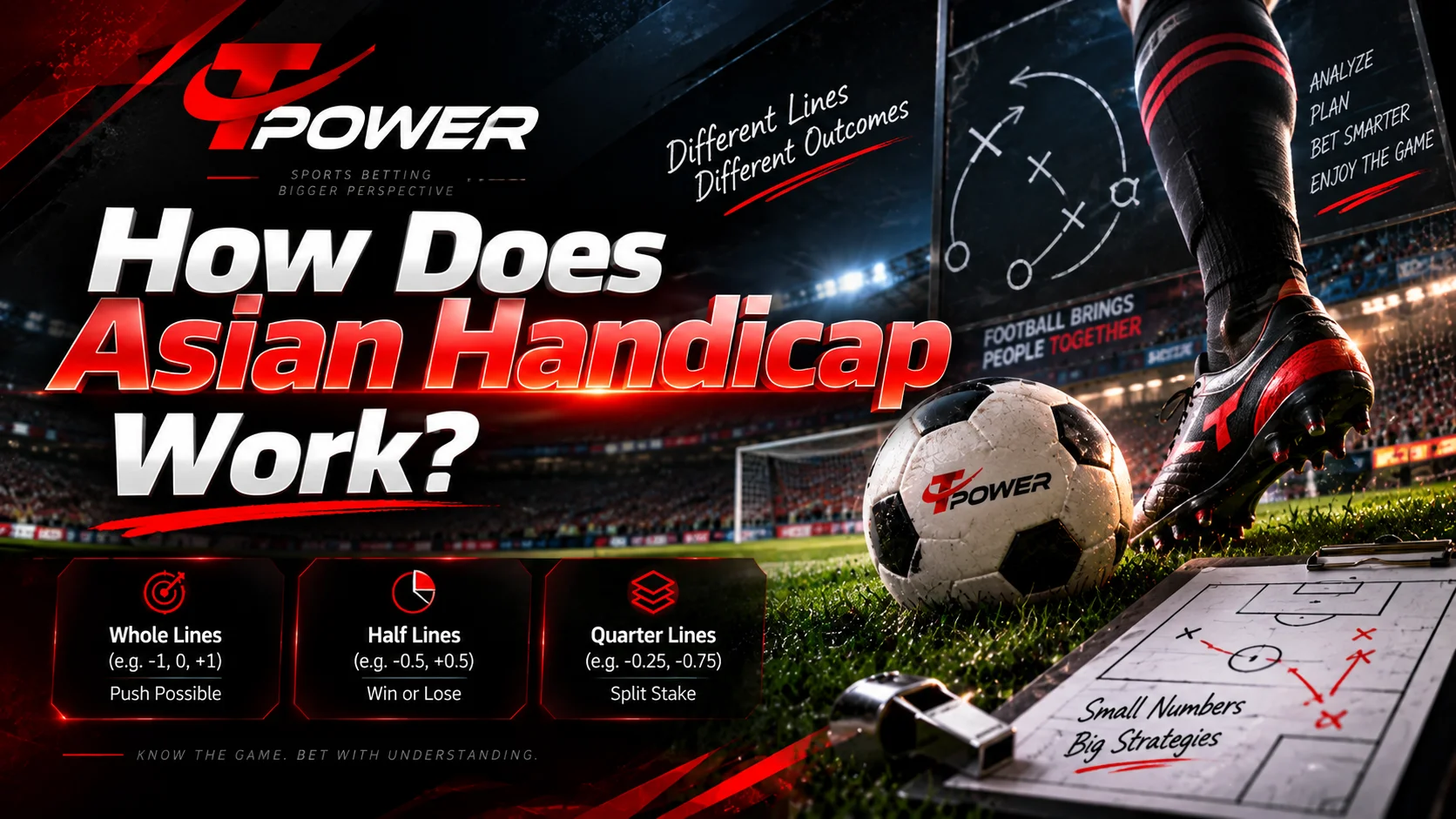
How Does Asian Handicap Work?
The easiest way to understand Asian Handicap is to think about the number as a modification used when settling the result.
Negative numbers generally represent a disadvantage.
Positive numbers represent an advantage.
For example:
| Selection | Basic Meaning |
|---|---|
| Team A 0 | No goal advantage |
| Team A -0.5 | Team A effectively starts 0.5 goal behind |
| Team A -1 | Team A effectively starts 1 goal behind |
| Team A -1.5 | Team A effectively starts 1.5 goals behind |
| Team B +0.5 | Team B effectively receives a 0.5-goal advantage |
| Team B +1 | Team B effectively receives a 1-goal advantage |
| Team B +1.5 | Team B effectively receives a 1.5-goal advantage |
This doesn’t change the score of the actual football match. It changes only how the wager is settled.
That distinction is important for people learning What is Online Sports Betting, because the result displayed by the match and the result used for a particular betting market are not necessarily the same thing.
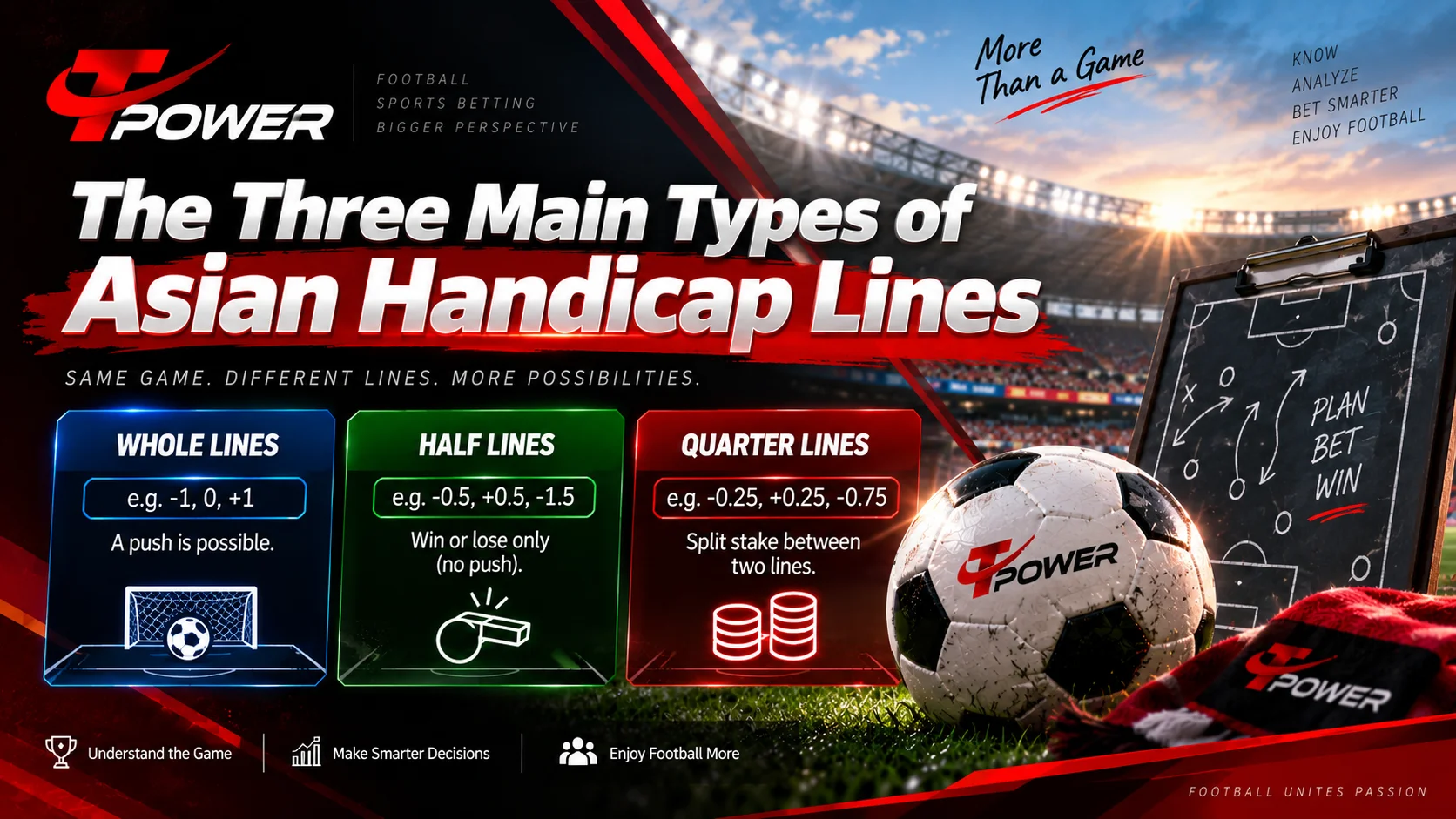
The Three Main Types of Asian Handicap Lines
The numbers may look complicated, but most Asian Handicap markets can be understood through three groups:
- Whole lines — 0, ±1, ±2
- Half lines — ±0.5, ±1.5, ±2.5
- Quarter lines — ±0.25, ±0.75, ±1.25, ±1.75
Each behaves differently.
The distinction is particularly important because quarter handicaps divide a wager across two lines, while whole lines can produce pushes and half lines cannot.
Let’s examine them individually.
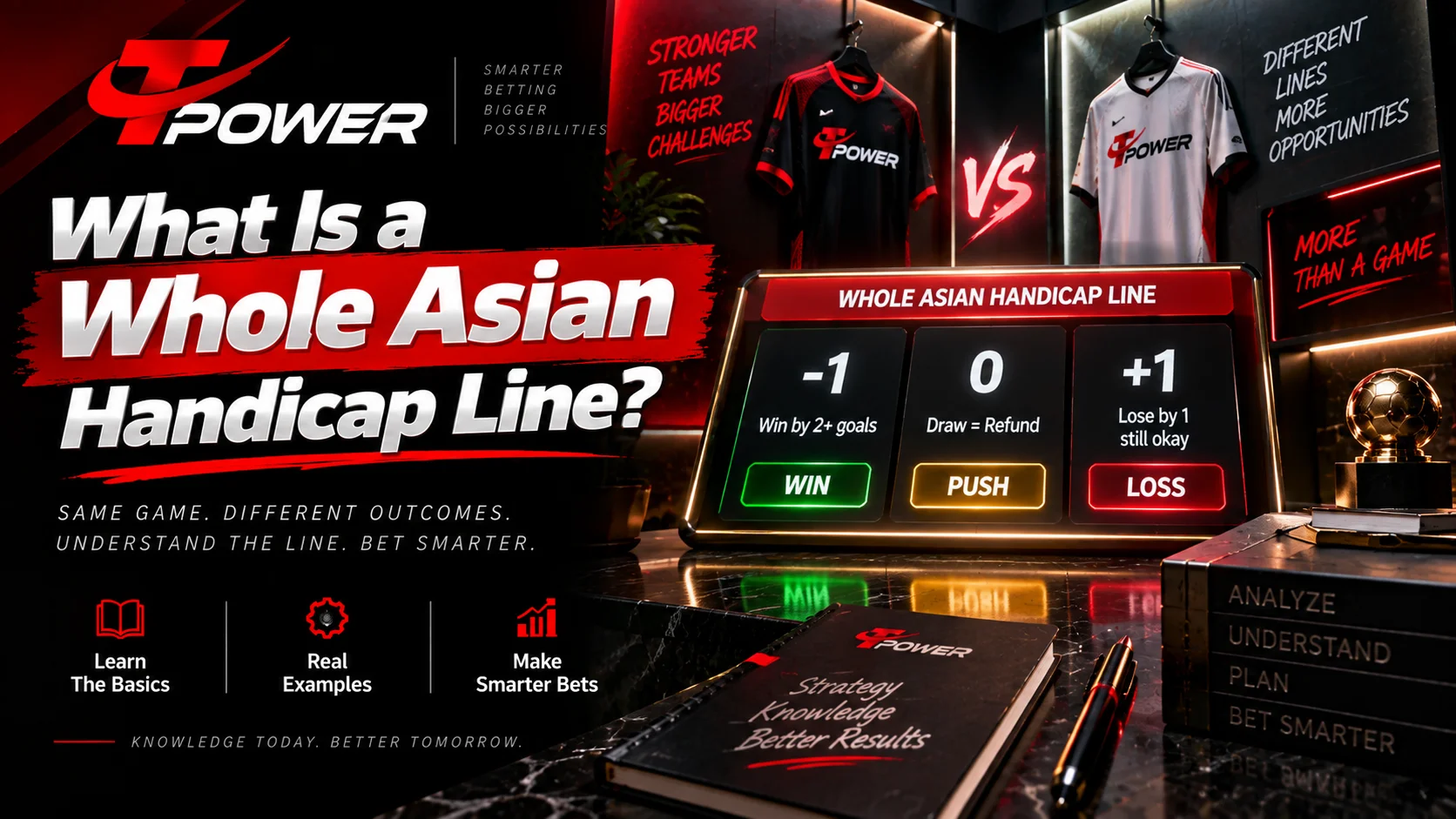
What Is a Whole Asian Handicap Line?
Whole Asian Handicap lines use complete numbers such as:
- 0
- -1
- +1
- -2
- +2
Their defining feature is that a push is possible.
A push happens when applying the handicap makes the adjusted result level. In that situation, the original stake is normally returned.
Example: Team A -1
Imagine the following market:
Team A -1
There are three basic scenarios.
| Actual Result | Handicap Result | Outcome |
|---|---|---|
| Team A wins by 2+ goals | Ahead after -1 | Win |
| Team A wins by exactly 1 | Level after -1 | Push |
| Team A draws or loses | Behind after -1 | Loss |
Suppose Team A wins 3-1.
After applying the -1 handicap:
The selection wins.
Suppose Team A wins 2-1.
Apply -1:
The selection pushes and the stake is returned.
Suppose the match ends 1-1.
After the handicap, Team A is behind for settlement purposes, so the selection loses.
This push mechanism is one of the reasons whole-number lines need to be distinguished from half-number lines.
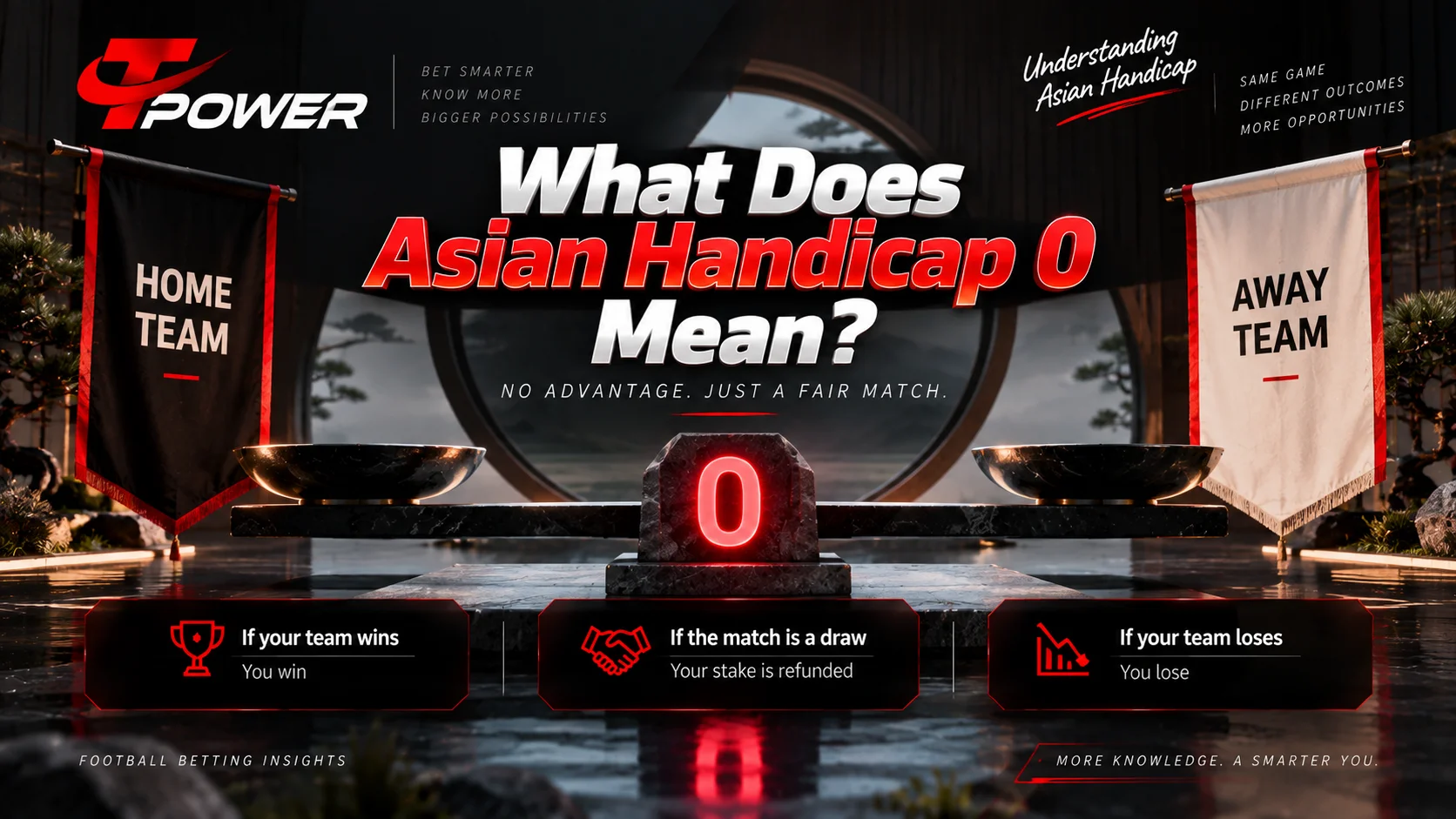
What Does Asian Handicap 0 Mean?
A 0 Asian Handicap is one of the easiest lines for beginners to understand.
There is no goal advantage or disadvantage.
Instead:
- Your team wins → bet wins
- Match ends in a draw → stake returned
- Your team loses → bet loses
For that reason, a zero Asian Handicap is commonly comparable in outcome structure to Draw No Bet.
For example, suppose you select:
Team B AH 0
and the match finishes:
Team A 1-1 Team B
The selection pushes.
There is no profit or loss on the wager itself; the stake is returned according to the applicable operator rules.
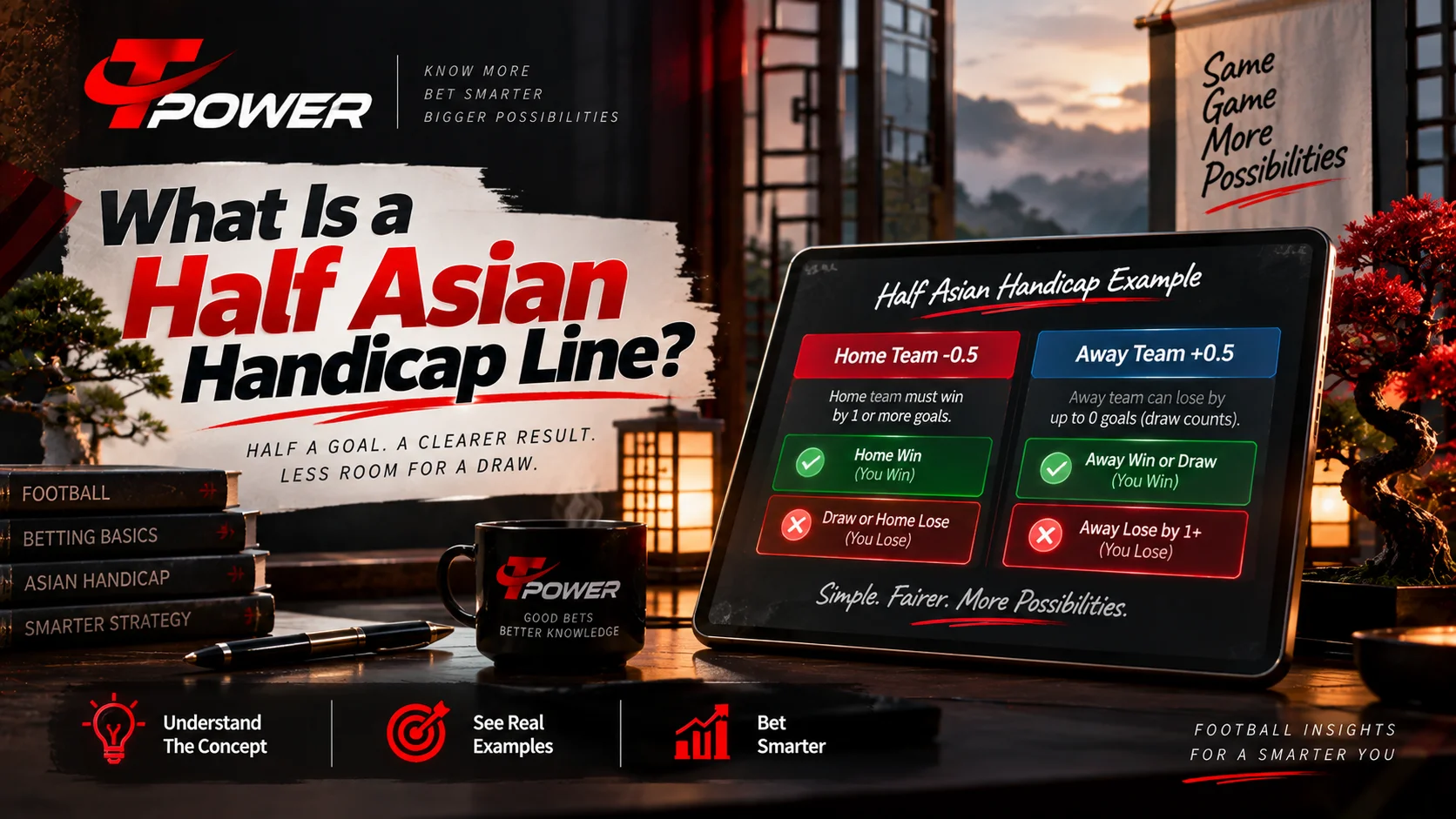
What Is a Half Asian Handicap Line?
Half handicaps contain .5, including:
- -0.5
- +0.5
- -1.5
- +1.5
- -2.5
Because a football team cannot score half a goal, the adjusted result cannot finish exactly level.
Therefore, a half-line Asian Handicap does not produce a push. It settles as either a win or a loss.
Example: Team A -0.5
If you select:
Team A -0.5
Team A needs to win the match.
| Match Result | Outcome |
|---|---|
| Team A wins | Win |
| Draw | Loss |
| Team A loses | Loss |
For example:
- Team A wins 1-0 → Win
- Team A wins 3-2 → Win
- Match ends 1-1 → Loss
- Team A loses 0-1 → Loss
The size of the victory doesn’t matter for -0.5. Team A simply needs to finish ahead.
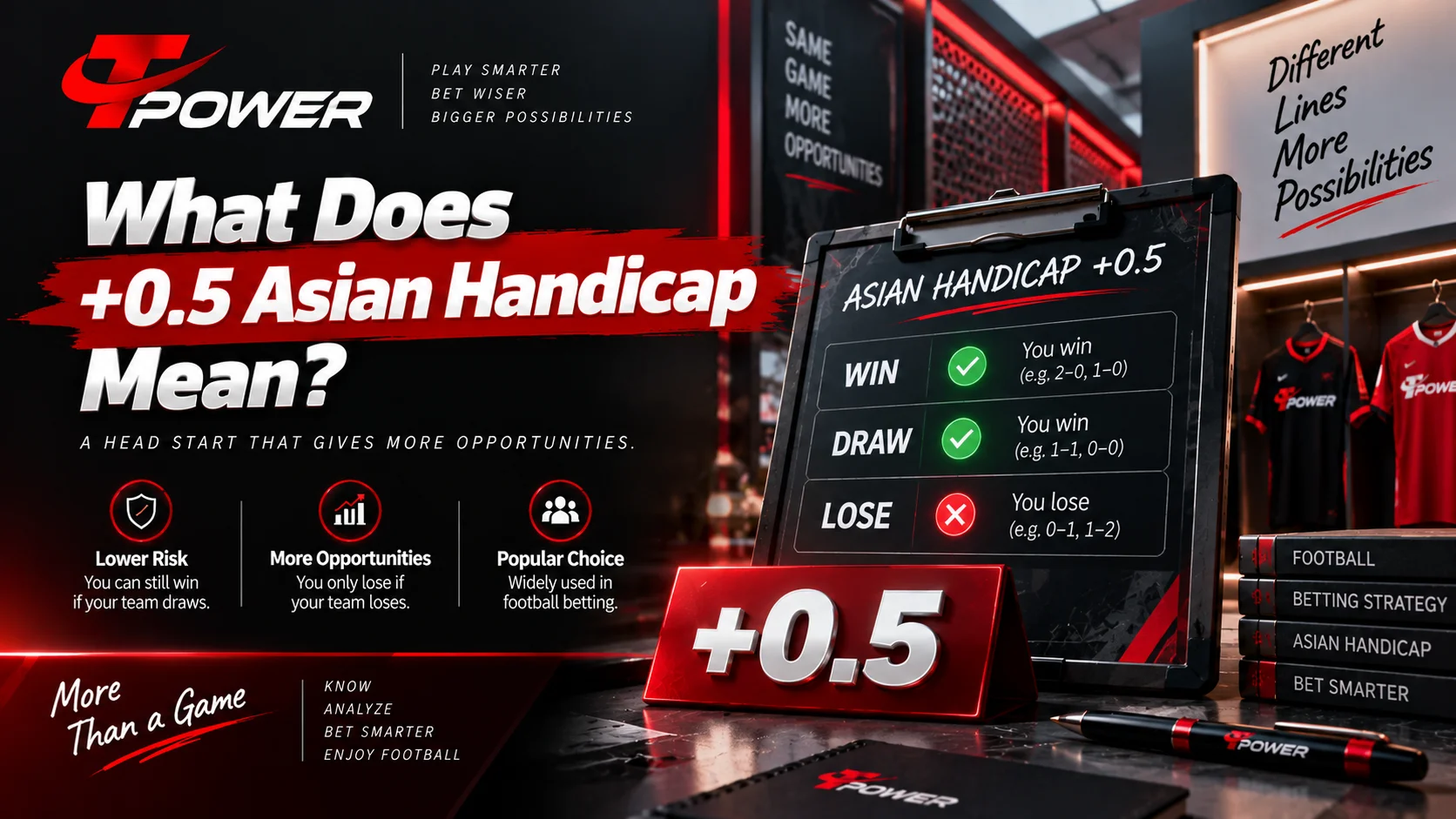
What Does +0.5 Asian Handicap Mean?
Now consider the opposite side:
Team B +0.5
Team B receives a virtual half-goal advantage.
This means Team B can either win or draw the actual match for the handicap selection to win.
| Actual Result | +0.5 Outcome |
|---|---|
| Team B wins | Win |
| Draw | Win |
| Team B loses | Loss |
Suppose the match finishes 1-1.
After adding +0.5 to Team B for settlement:
Team A 1 – 1.5 Team B
The +0.5 selection wins.
This demonstrates why the + and – signs should always be read together with the handicap number.
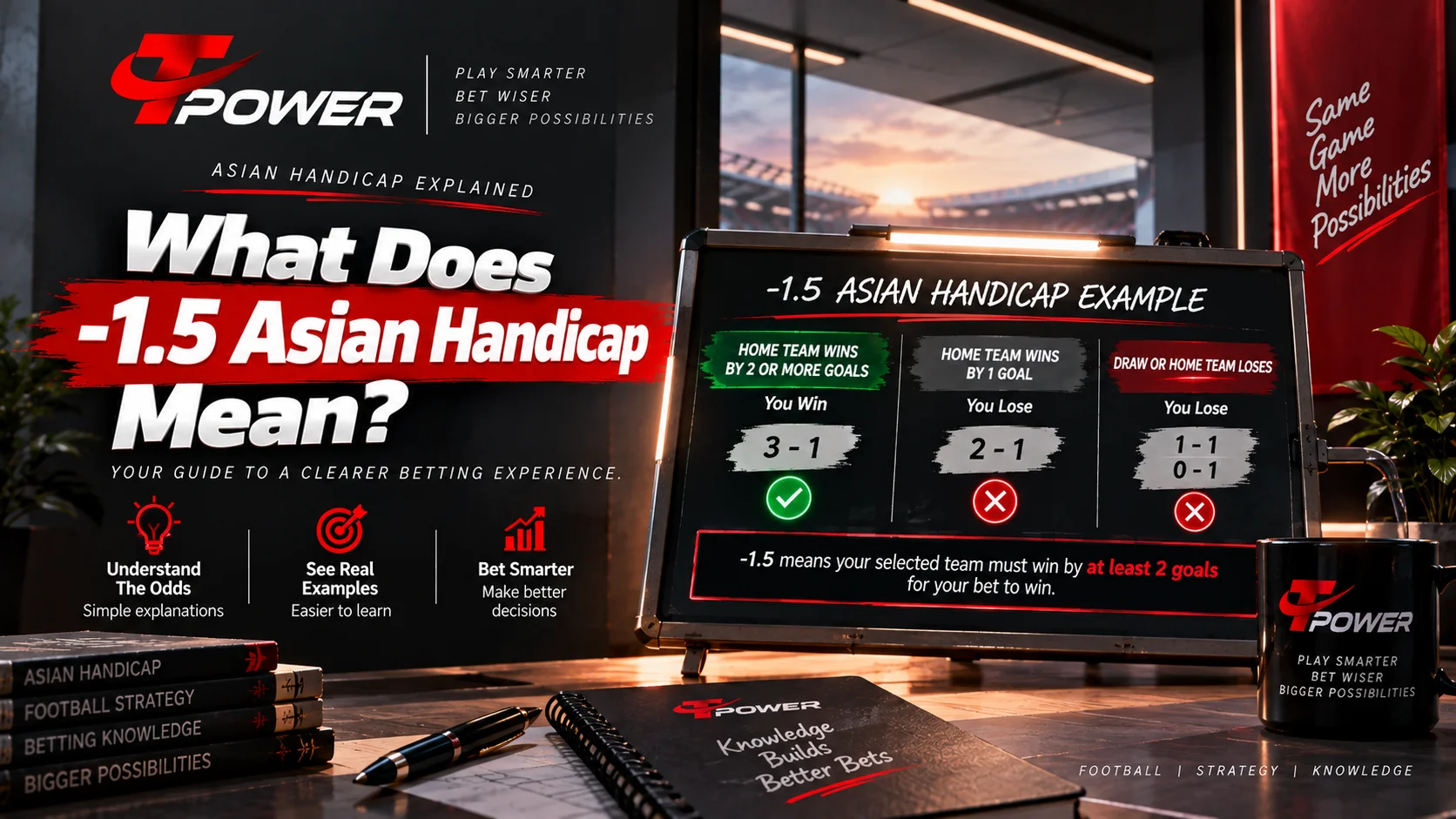
What Does -1.5 Asian Handicap Mean?
A larger negative handicap requires a larger winning margin.
Consider:
Team A -1.5
Team A must win by at least two goals.
- A 2-0 victory works.
- A 3-1 victory works.
- A 1-0 victory doesn’t.
There is no push because a half goal prevents the adjusted score from finishing level.
| Team A’s Result | -1.5 Outcome |
|---|---|
| Wins by 2+ | Win |
| Wins by exactly 1 | Loss |
| Draws | Loss |
| Loses | Loss |
This is why simply predicting the winning team isn’t sufficient when reading an Asian Handicap market. The margin of victory can determine settlement.
What Is a Quarter Asian Handicap Line?
Quarter lines are where Asian Handicap becomes more difficult for new users.
Common examples include:
- -0.25
- +0.25
- -0.75
- +0.75
- -1.25
- +1.25
The important concept is:
A quarter handicap divides the stake equally between two adjacent handicap lines.
For example:
- -0.25 = half at 0 + half at -0.5
- -0.75 = half at -0.5 + half at -1
- -1.25 = half at -1 + half at -1.5
- -1.75 = half at -1.5 + half at -2
This split is what creates the terms half win and half loss.
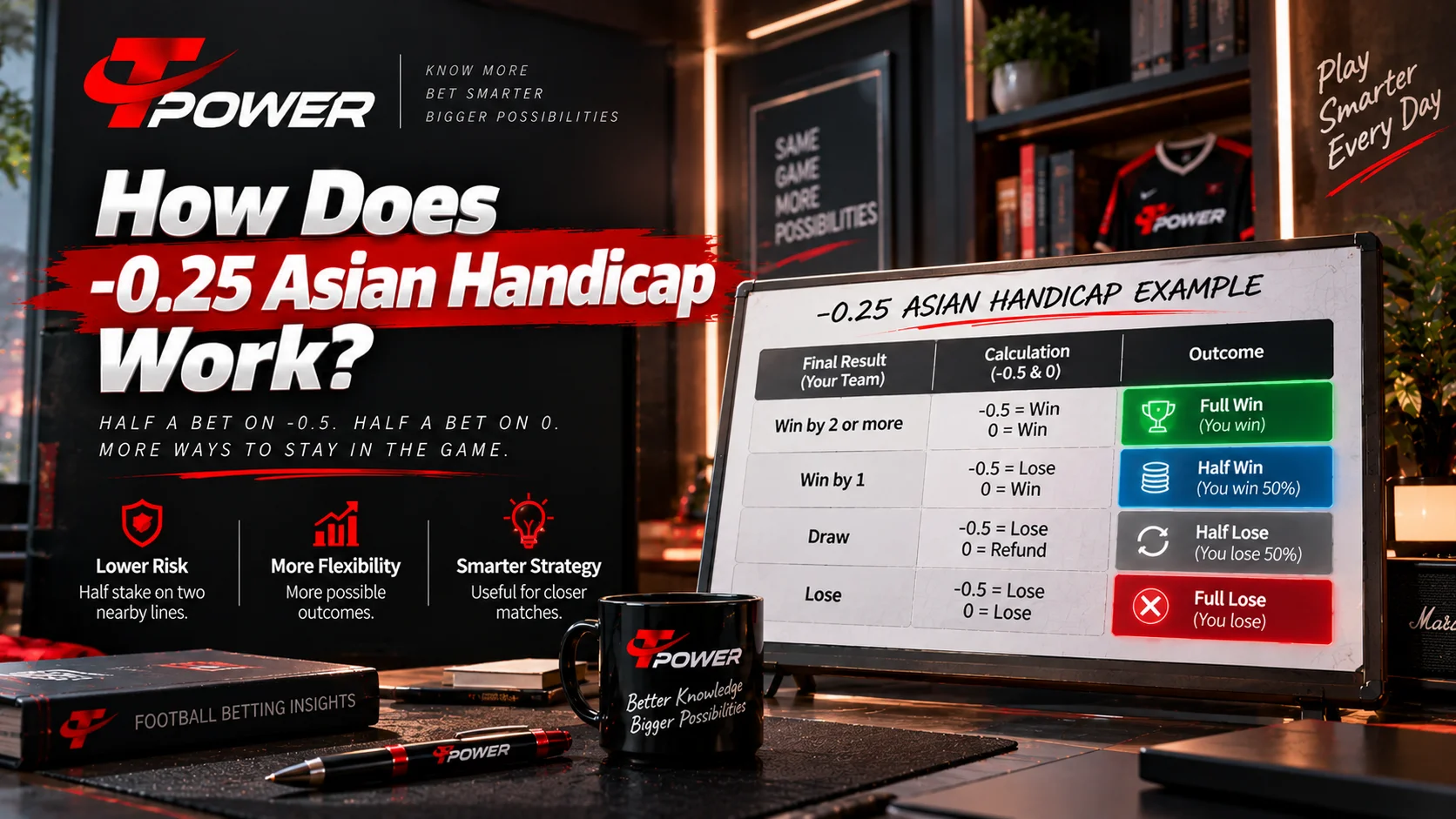
How Does -0.25 Asian Handicap Work?
Suppose you select:
Team A -0.25
Your stake is effectively divided equally between:
Team A 0
and
Team A -0.5
Let’s use RM100 purely as a mathematical example.
RM50 goes to Team A 0.
RM50 goes to Team A -0.5.
If Team A wins
Both portions win.
Result: full win.
If the match is drawn
The 0 portion pushes and is returned.
The -0.5 portion loses.
Result: half loss.
If Team A loses
Both portions lose.
Result: full loss.
So:
| Team A Result | -0.25 Settlement |
|---|---|
| Win | Full win |
| Draw | Half loss |
| Loss | Full loss |
This is much easier to understand once you stop treating -0.25 as a literal quarter-goal score and instead see it as two separate settlement lines.
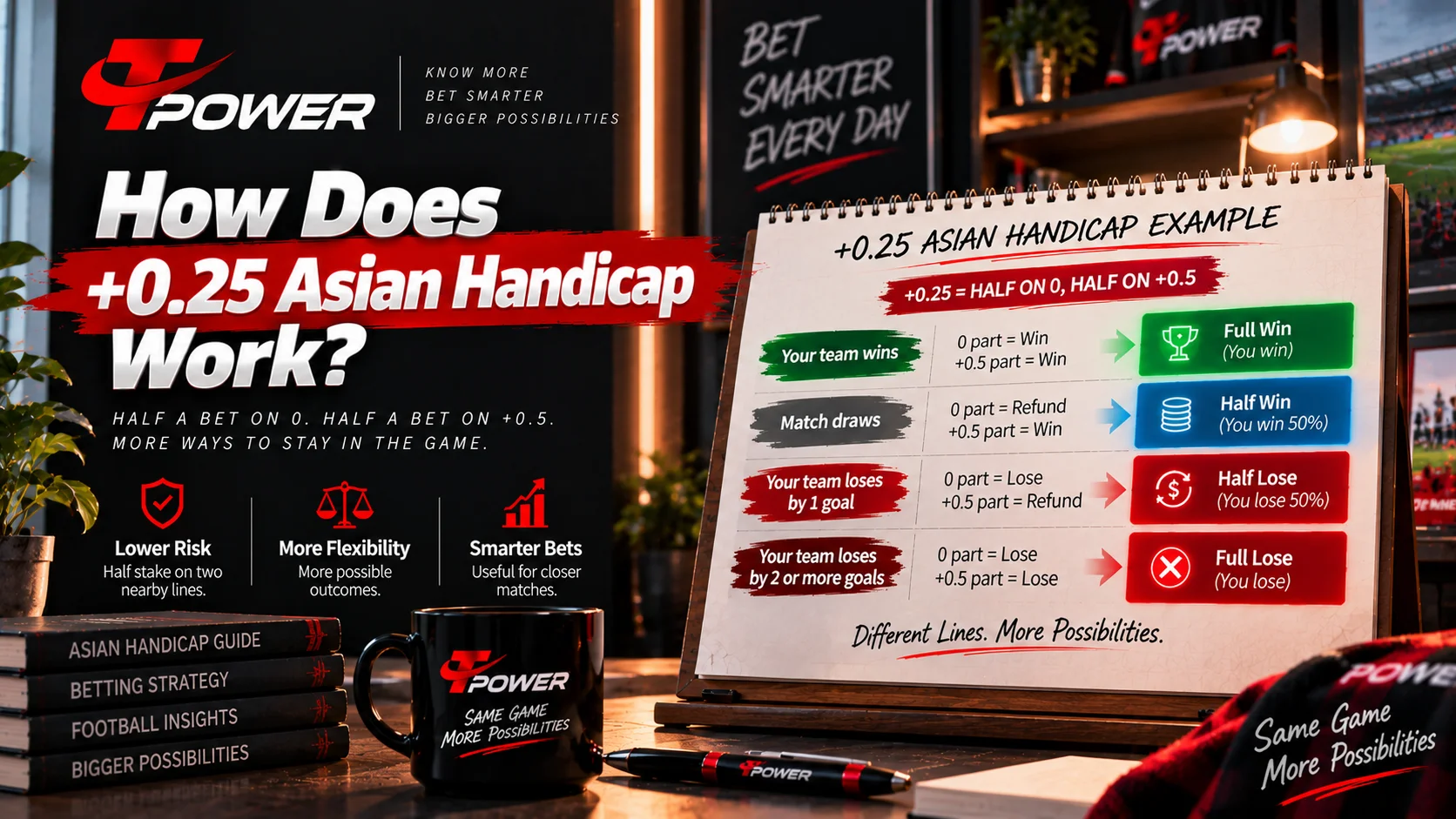
How Does +0.25 Asian Handicap Work?
The opposite is:
Team B +0.25
This divides the stake between:
Team B 0
and
Team B +0.5
If Team B wins
Both portions win.
Result: full win.
If the match is drawn
The 0 portion pushes,
while the +0.5 portion wins.
That produces a half win.
If Team B loses
Both portions lose.
Result: full loss.
| Team B Result | +0.25 Settlement |
|---|---|
| Win | Full win |
| Draw | Half win |
| Loss | Full loss |
Quarter lines therefore introduce more possible settlement outcomes than simple half lines.
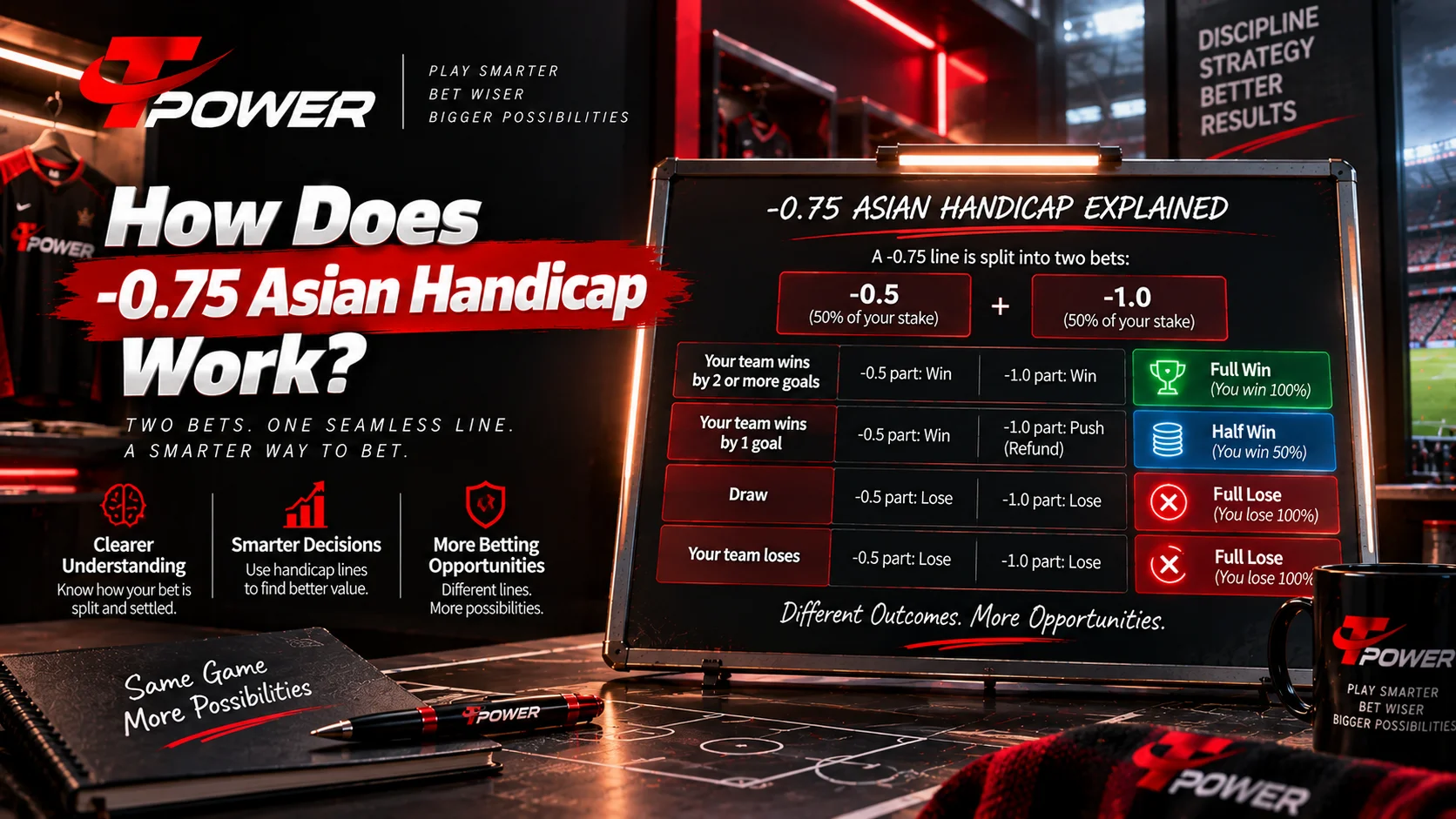
How Does -0.75 Asian Handicap Work?
Another common line is:
Team A -0.75
This is split into:
50% at -0.5
and
50% at -1
Suppose Team A wins by two goals
Both portions win.
Result: full win.
Now suppose Team A wins by exactly one goal
The -0.5 portion wins.
The -1 portion pushes.
Result: half win.
If Team A draws or loses
Both portions lose.
Result: full loss.
| Team A Result | -0.75 Settlement |
|---|---|
| Wins by 2+ | Full win |
| Wins by exactly 1 | Half win |
| Draws | Full loss |
| Loses | Full loss |
This settlement structure is confirmed across explanations of quarter-line Asian Handicap mechanics.
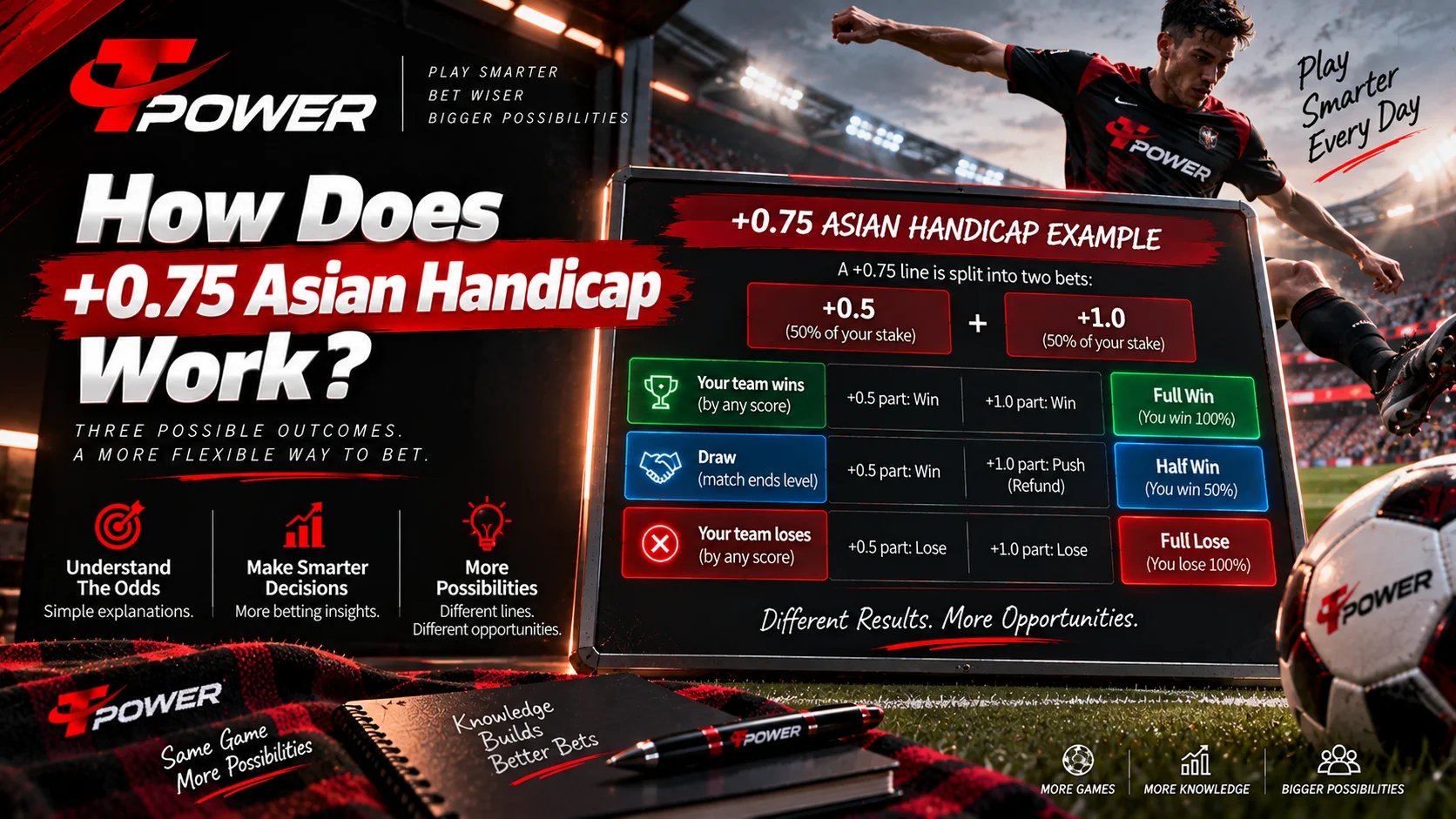
How Does +0.75 Asian Handicap Work?
Now reverse the situation.
Team B +0.75
The stake is divided into:
+0.5
and
+1
If Team B wins or draws
Both portions win.
Result: full win.
If Team B loses by exactly one goal
The +0.5 portion loses,
while the +1 portion pushes.
That creates a half loss.
If Team B loses by two or more goals
Both portions lose.
Result: full loss.
| Team B Result | +0.75 Settlement |
|---|---|
| Win | Full win |
| Draw | Full win |
| Lose by exactly 1 | Half loss |
| Lose by 2+ | Full loss |
Once you understand this split, larger quarter lines such as ±1.25 and ±1.75 follow the same principle.
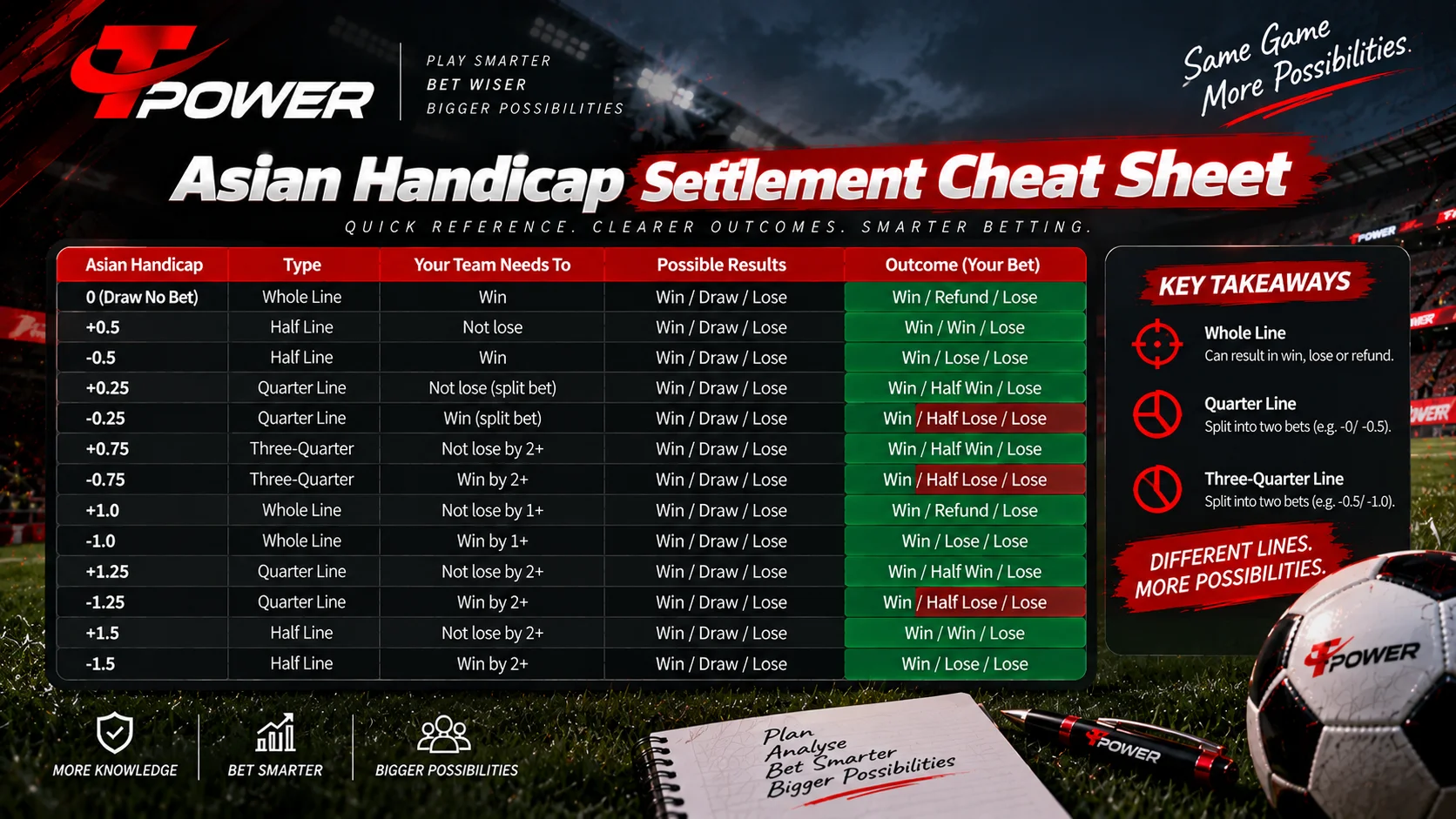
Asian Handicap Settlement Cheat Sheet
Here is a compact reference:
| Handicap | Typical Requirement |
|---|---|
| 0 | Win = win; draw = refund |
| -0.25 | Win = full win; draw = half loss |
| +0.25 | Win = full win; draw = half win |
| -0.5 | Team must win |
| +0.5 | Team can win or draw |
| -0.75 | Win by 2+ = full win; win by 1 = half win |
| +0.75 | Win/draw = full win; lose by 1 = half loss |
| -1 | Win by 2+ = win; win by 1 = push |
| +1 | Win/draw = win; lose by 1 = push |
| -1.5 | Must win by 2+ |
| +1.5 | Can lose by 1 and still win |
This table is useful for reference, but the underlying logic matters more than memorising every number.
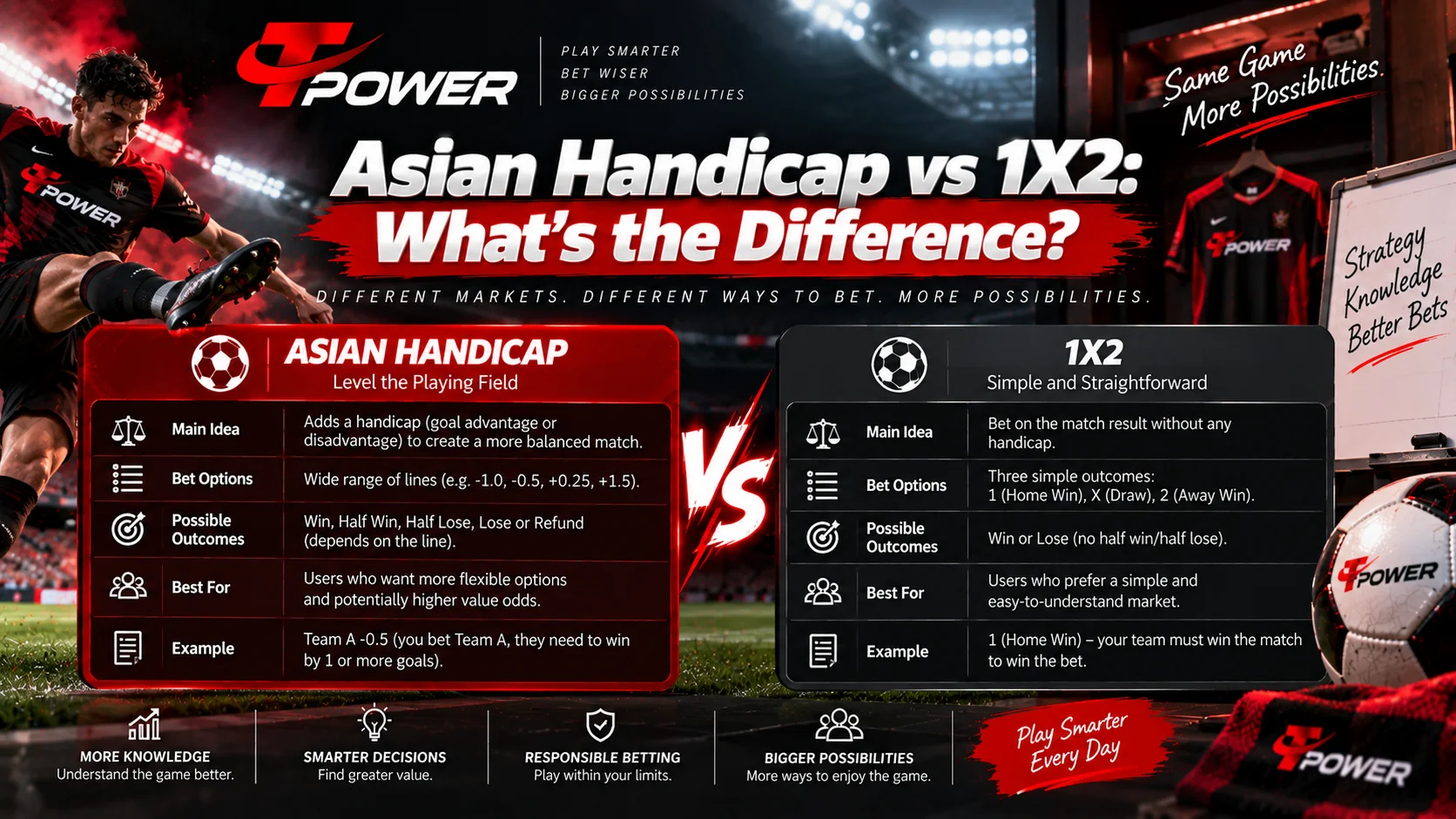
Asian Handicap vs 1X2: What’s the Difference?
Traditional football 1X2 betting normally presents three outcomes:
- 1 — Home win
- X — Draw
- 2 — Away win
Asian Handicap changes that structure by introducing a virtual advantage or disadvantage and generally turning the market into two sides, although whole lines can still result in a push.
| Feature | Asian Handicap | 1X2 |
|---|---|---|
| Primary selections | Two sides | Home / Draw / Away |
| Handicap applied | Yes | No |
| Push possible | On applicable whole lines | No |
| Half win/loss | Quarter lines | No |
| Winning margin can matter | Yes | Usually no |
| Draw selected directly | Generally no | Yes |
Neither format is inherently “better.” They represent different ways of structuring a football market.
For beginners, 1X2 may initially be easier to read. Asian Handicap requires additional understanding of settlement, particularly when .25 and .75 lines appear.

Asian Handicap vs 1X2: What’s the Difference?
Traditional football 1X2 betting normally presents three outcomes:
- 1 — Home win
- X — Draw
- 2 — Away win
Asian Handicap changes that structure by introducing a virtual advantage or disadvantage and generally turning the market into two sides, although whole lines can still result in a push.
| Feature | Asian Handicap | 1X2 |
|---|---|---|
| Primary selections | Two sides | Home / Draw / Away |
| Handicap applied | Yes | No |
| Push possible | On applicable whole lines | No |
| Half win/loss | Quarter lines | No |
| Winning margin can matter | Yes | Usually no |
| Draw selected directly | Generally no | Yes |
Neither format is inherently “better.” They represent different ways of structuring a football market.
For beginners, 1X2 may initially be easier to read. Asian Handicap requires additional understanding of settlement, particularly when .25 and .75 lines appear.

Asian Handicap on MaxBet, Bet33 and M9Bet
Different sports interfaces can present essentially the same football concept in slightly different ways.
For example, a quarter line might appear as:
-0.75
or as two associated lines such as:
-0.5 / -1
Both can describe the same split-stake principle, depending on the interface.
Users looking specifically at MaxBet, Bet33 or M9Bet should therefore understand the handicap itself rather than relying only on the visual layout.
Terms such as MaxBet IBCBet, MaxBet Malaysia, Bet33 Login, Live Bet33, M9Bet Login and M9Bet Mobile describe platforms, access methods or related searches. They should not be treated as different definitions of Asian Handicap.
Always check the applicable provider’s displayed market and settlement rules before placing a selection.

Does Asian Handicap Work Only for Football?
No. Handicap concepts can appear across different sports, although the format, unit and settlement rules can vary substantially.
This article focuses specifically on football because goals provide an easy way to explain whole, half and quarter handicap lines.
That distinction matters.
Applying football examples directly to basketball or another sport without checking the relevant rules can lead to misunderstanding.
So although users may encounter sports such as the NBA or badminton when browsing an online sportsbook, the examples in this guide should be understood specifically as football Asian Handicap examples.

What Is Live Asian Handicap Betting?
Asian Handicap markets can also appear after a football match has started.
This is generally known as live betting or in-play betting.
The available handicap can change as the match develops because the game state has changed.
For example, factors reflected in live markets may include:
- Current score
- Remaining match time
- Match events
- Market movement
- The provider’s live pricing
The crucial point is that users should read the current line rather than assume it is identical to the pre-match handicap.
The exact settlement treatment can also depend on the sportsbook’s rules, particularly around abandoned, postponed or interrupted events.
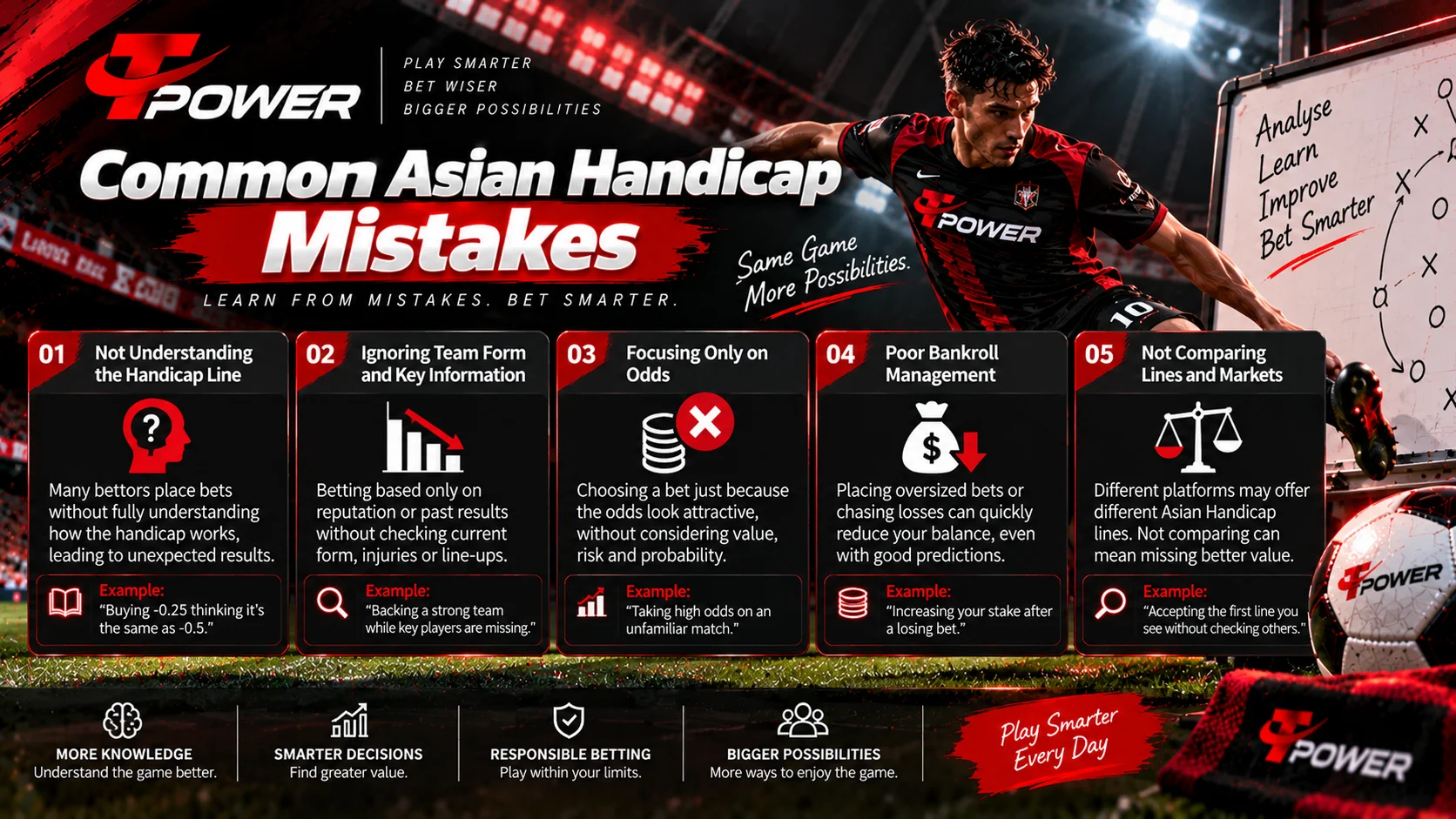
Common Asian Handicap Mistakes
1. Thinking -1 and -1.5 Mean the Same Thing
The first common mistake is thinking -1 and -1.5 mean the same thing.
They don’t.
A team selected at -1 that wins by exactly one goal produces a push. At -1.5, the same one-goal victory loses.
2. Misunderstanding Quarter Lines
The second is misunderstanding quarter lines.
-0.75 isn’t simply a strange version of -1. It represents a split between -0.5 and -1.
3. Forgetting Which Team the Handicap Applies To
The third is forgetting which team the handicap applies to.
Always read the team name, plus/minus sign and number together.
4. Not Checking the Actual Final Score
The fourth is calculating the outcome from the handicap alone without checking the actual final score.
And finally, users should not assume that understanding the mechanics predicts the match. Asian Handicap explains how a wager is settled; it does not tell you which team will win.
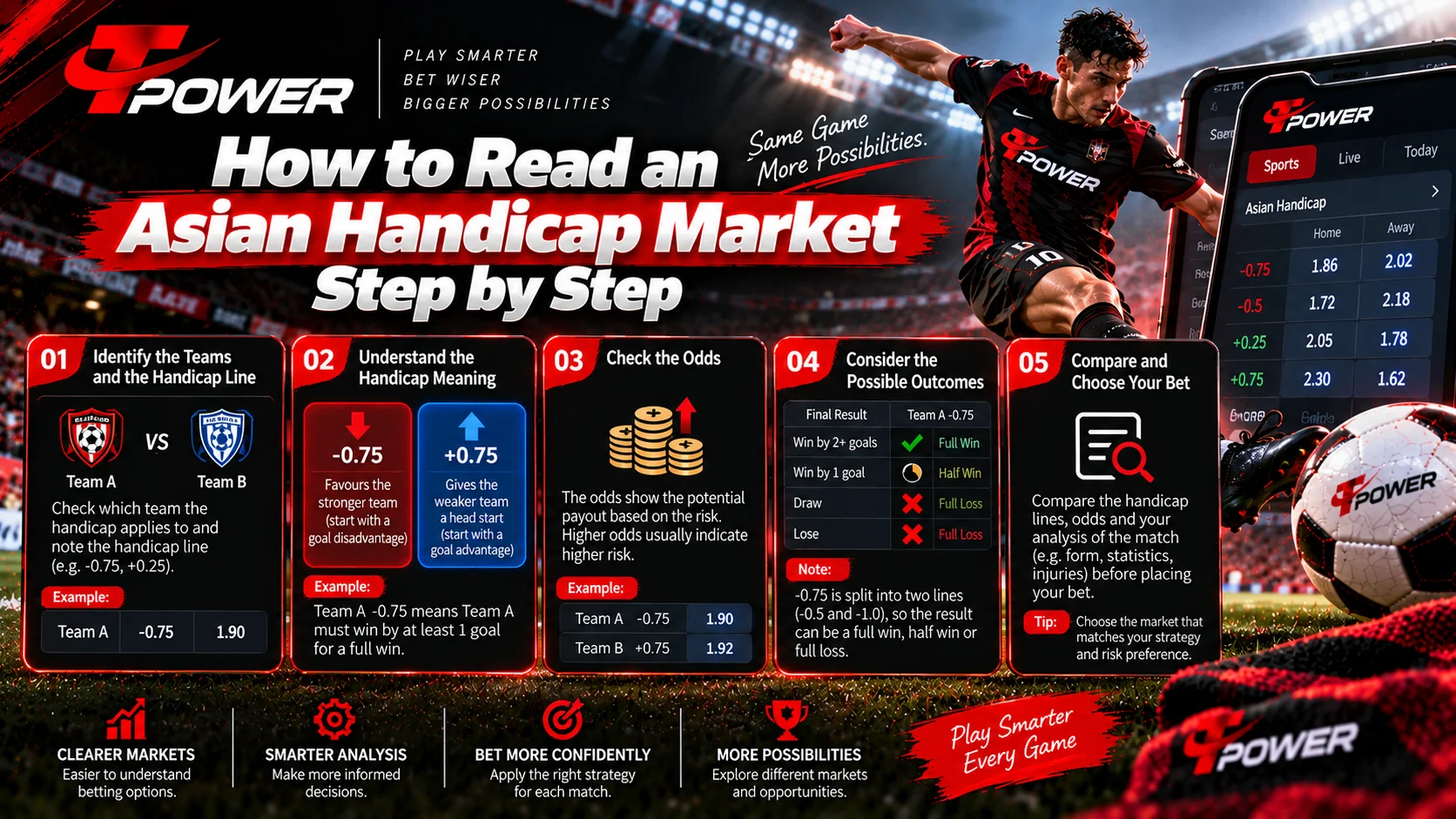
How to Read an Asian Handicap Market Step by Step
When you encounter a handicap line, use a simple process.
First, identify the team.
Which team does your selection refer to?
Second, check the sign.
Is it + or –?
Third, identify the line type.
Is it whole, half or quarter?
Fourth, understand the required margin.
For example, -1.5 means the selected football team needs to win by at least two goals.
Fifth, check whether a push or split settlement is possible.
- Whole → push possible.
- Half → no push.
- Quarter → split settlement.
This approach is considerably safer than trying to memorise dozens of possible score combinations.

How to Read an Asian Handicap Market Step by Step
When you encounter a handicap line, use a simple process.
First, identify the team.
Which team does your selection refer to?
Second, check the sign.
Is it + or –?
Third, identify the line type.
Is it whole, half or quarter?
Fourth, understand the required margin.
For example, -1.5 means the selected football team needs to win by at least two goals.
Fifth, check whether a push or split settlement is possible.
- Whole → push possible.
- Half → no push.
- Quarter → split settlement.
This approach is considerably safer than trying to memorise dozens of possible score combinations.
Frequently Asked Questions
What is Asian Handicap?
Asian Handicap is a sports betting market that applies a virtual advantage or disadvantage to a team before the final result is evaluated for settlement. It commonly uses whole, half and quarter-goal lines in football.
What does -0.5 Asian Handicap mean?
A -0.5 selection needs the selected team to win the match. A draw or defeat results in the selection losing.
What does +0.5 Asian Handicap mean?
A team at +0.5 can either win or draw the actual match for the handicap selection to win.
What happens with Asian Handicap -1?
If the selected team wins by two or more goals, the bet wins. If it wins by exactly one, the bet pushes and the stake is returned. A draw or defeat results in a loss.
What does Asian Handicap -0.25 mean?
A -0.25 wager is divided equally between 0 and -0.5. A win produces a full win, a draw produces a half loss, and a defeat produces a full loss.
What does Asian Handicap -0.75 mean?
A -0.75 wager is split equally between -0.5 and -1. A victory by two or more produces a full win; a victory by exactly one produces a half win; a draw or defeat produces a full loss.
What is a push in Asian Handicap?
A push occurs when the adjusted result finishes level on an applicable whole handicap line. The stake is normally returned.
What is a half win?
A half win can occur on a quarter handicap. One half of the divided stake wins while the other half pushes and is returned.
What is a half loss?
A half loss occurs when one part of a quarter-line wager loses while the other part pushes. Consequently, half of the stake is lost while the other half is returned.
Is Asian Handicap the same as 1X2?
No. 1X2 provides home, draw and away selections. Asian Handicap applies a virtual handicap and structures the market around two opposing sides, with pushes or partial settlements possible on certain lines.